Virunga National Park
Africa's oldest national park spans glaciers, an active lava lake, and dense montane forest, home to roughly a third of the world's remaining mountain gorillas.
From montane gorilla forest to an active volcanic crater
Founded in 1925 as Albert National Park, Virunga is Africa's first and one of its most ecologically diverse protected areas, stretching from the Rwenzori glaciers in the north to the savannahs of the Rwindi plains and the active Nyiragongo volcano in the south.
The park anchors the Virunga Massif's mountain gorilla population, shared across DRC, Rwanda, and Uganda, and shelters lowland gorillas, chimpanzees, forest elephants, and Africa's highest density of hippos along the Rwindi and Ishasha rivers.
Virunga's 196 recorded habitat types, from equatorial forest to Afro-alpine moorland, make it one of the most biologically varied single sites on the continent. Nyiragongo's lava lake, one of the largest and most active on Earth, draws climbers on a two-day summit trek.
Decades of conflict in eastern DRC have repeatedly disrupted access; current visits are coordinated closely with park authorities, and travellers should always check current safety guidance before booking gorilla trekking or the Nyiragongo hike.
What makes Virunga distinct
Virunga's range of altitudes and habitats supports one of the richest large-mammal assemblages anywhere in Africa.
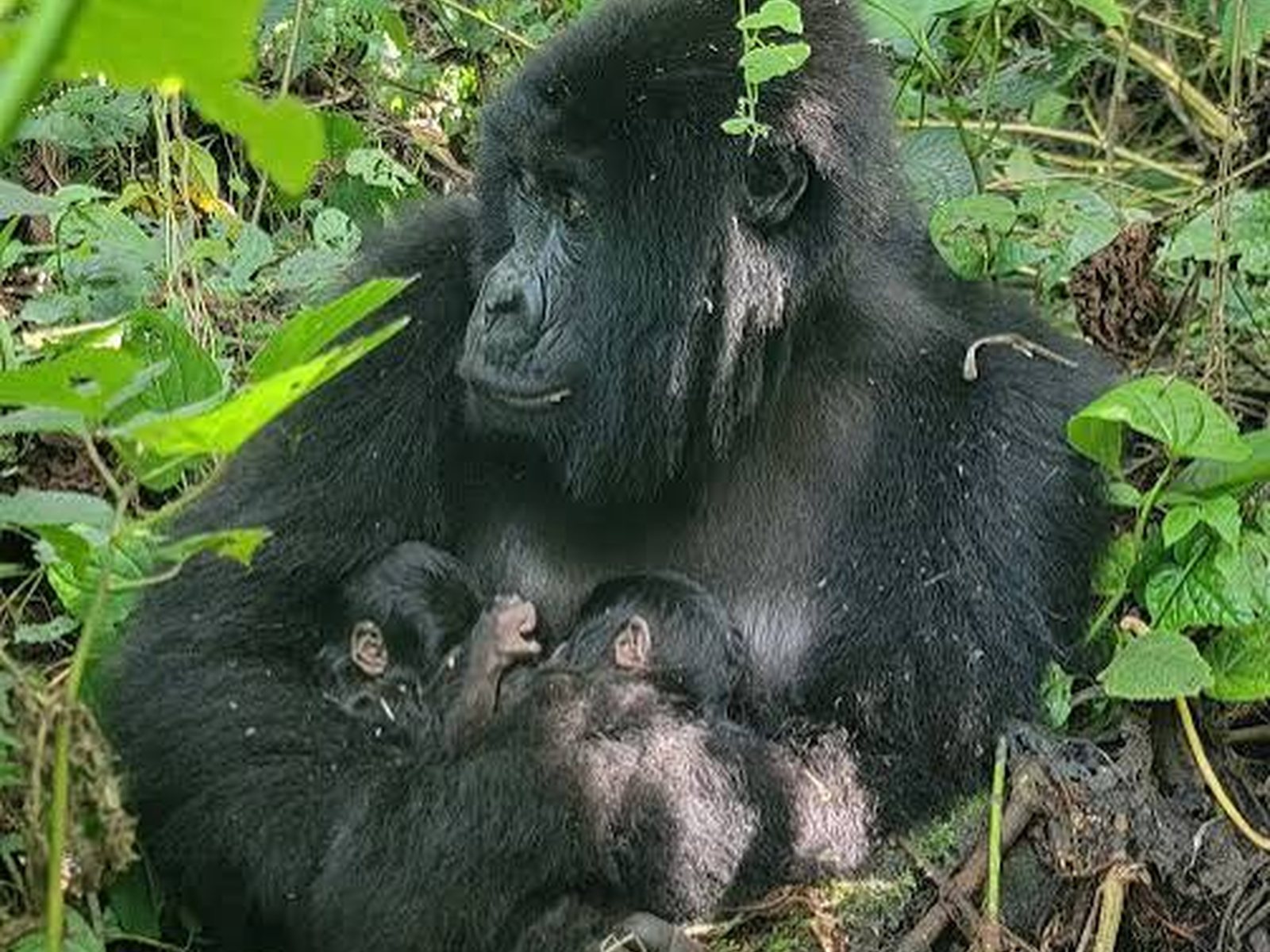
Mountain gorillas
The Virunga Massif holds roughly a third of the world's mountain gorillas, tracked on foot through montane forest and bamboo zones.
Nyiragongo's lava lake
One of the world's largest and most active lava lakes sits inside Nyiragongo's crater, reached via a steep two-day trek.
Eastern lowland gorillas
Grauer's gorillas persist in Virunga's lowland forest sectors, alongside chimpanzees and forest elephants.
Rwindi hippo population
The Rwindi-Ishasha river system holds one of Africa's densest hippopotamus populations.
Savannah wildlife
The Rwindi plains support lions, buffalo, antelope, and Uganda kob in classic East African savannah habitat.
Rwenzori glaciers
Virunga's northern sector reaches the glaciated peaks of the Rwenzori range, the 'Mountains of the Moon.'
How a Virunga gorilla trek typically comes together
Most visits route through Goma, with permits and security clearance arranged directly with Virunga National Park authorities.
Fly into Goma
Most itineraries begin with a flight into Goma, gateway to Virunga's southern sector, connecting via Kinshasa or regional hubs.
Secure gorilla trekking permits
Permits are limited and arranged in advance with Virunga National Park, alongside current security clearance.
Mountain gorilla trekking
Guided treks into the Mikeno sector track habituated gorilla families through montane forest.
Nyiragongo summit trek
A separate two-day hike climbs to the crater rim to camp beside the active lava lake.
Optional Rwindi safari extension
Some itineraries extend north to the Rwindi plains for classic savannah game viewing.
Africa's most fought-for park
Virunga has been on UNESCO's List of World Heritage in Danger since 1994. Decades of armed conflict, oil exploration pressure, and charcoal-driven deforestation have repeatedly threatened the park, while more than 200 rangers have lost their lives protecting it, among the highest ranger death tolls of any protected area on Earth.
Despite this, Virunga's mountain gorilla population has grown through sustained conservation work, and tourism revenue directly funds ranger salaries, community hydroelectric projects, and anti-poaching patrols. Check our travel guide for current access conditions before booking.
Planning questions, answered
Can I still trek gorillas in Virunga?
Access depends on current security conditions in North Kivu, which can change. Virunga National Park and licensed DRC operators coordinate directly with park authorities on timing and routing.
How many mountain gorillas live in Virunga?
The Virunga Massif, shared across DRC, Rwanda, and Uganda, holds roughly a third of the world's mountain gorillas, with several habituated families trekked from the DRC side.
What is the Nyiragongo hike like?
It's a steep two-day trek to the crater rim, where climbers camp overnight beside one of the world's largest and most active lava lakes.
When is the best time to visit Virunga?
The drier months from June to September and December to February generally offer the most reliable trekking conditions.
Is Virunga just about gorillas?
No. The park spans glaciated peaks, savannah plains with lions and hippos, and an active volcano, making it one of Africa's most ecologically varied single parks.
More of the DRC to plan around Virunga
Ready to plan a Virunga gorilla trek?
Our team builds itineraries around gorilla permits, the Nyiragongo hike, and current access guidance for North Kivu.
What to do here
Top experiences in Virunga National Park
- Mountain gorillasThe Virunga Massif holds roughly a third of the world's mountain gorillas, tracked on foot through montane forest and bamboo zones.
- Nyiragongo's lava lakeOne of the world's largest and most active lava lakes sits inside Nyiragongo's crater, reached via a steep two-day trek.
- Eastern lowland gorillasGrauer's gorillas persist in Virunga's lowland forest sectors, alongside chimpanzees and forest elephants.
- Rwindi hippo populationThe Rwindi-Ishasha river system holds one of Africa's densest hippopotamus populations.
Entry requirements for visiting Virunga National Park
Every traveller needs a visa in advance. Read our step-by-step DRC e-visa and Congo tourist visa guide for the official DGM portal walkthrough, letter of invitation (LOI) requirements, fees, processing times and airport entry checks.
Nearby & similar
Related destinations