Sarambwe Nature Reserve
A small but crucial forest corridor contiguous with Uganda's Bwindi Impenetrable National Park, letting mountain gorillas move freely between the two countries.
The forest that connects DRC to Bwindi's gorillas
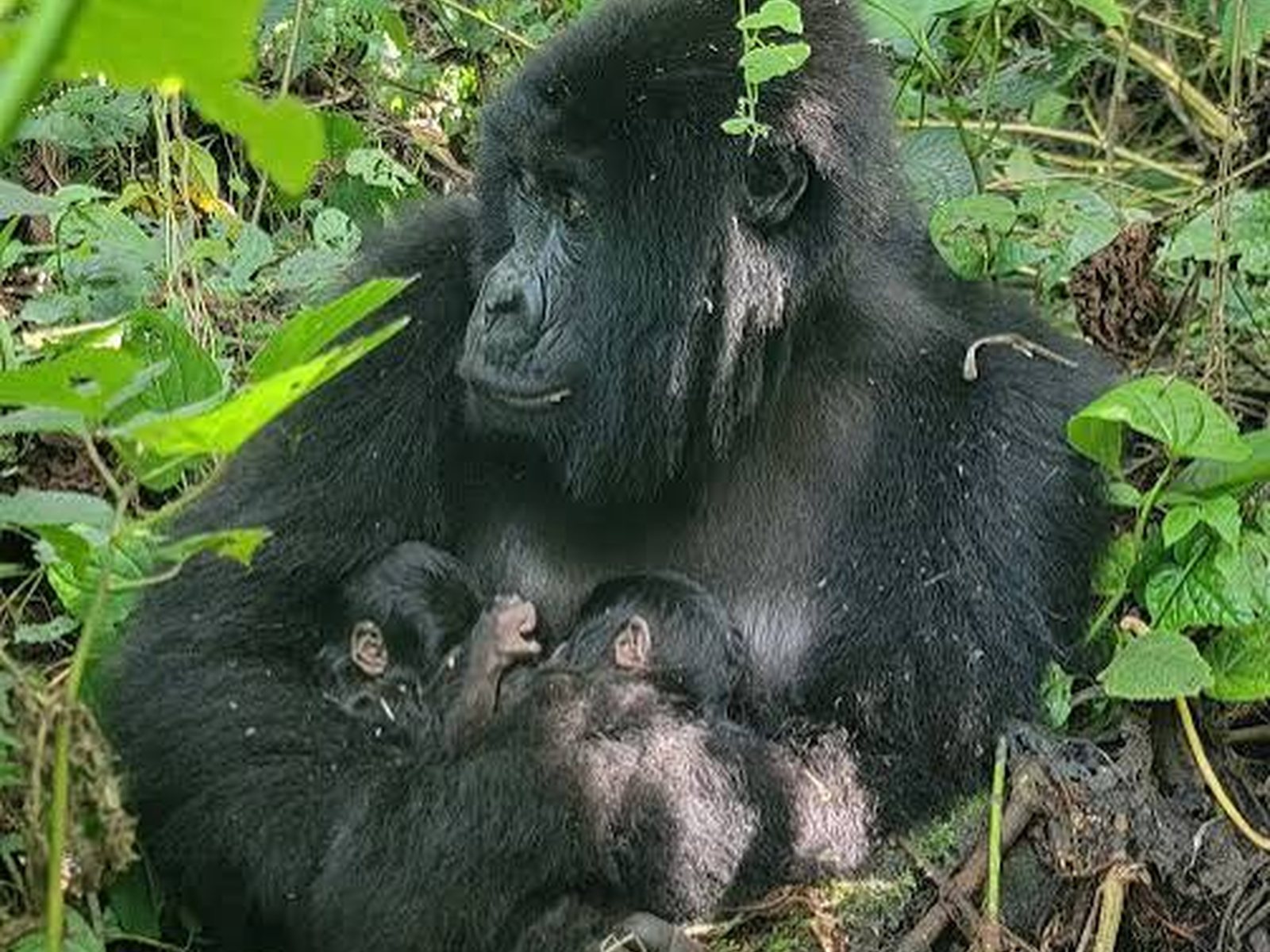
Sarambwe Nature Reserve is a small forest of roughly 900 hectares on the DRC-Uganda border, contiguous with Uganda's Bwindi Impenetrable National Park, allowing mountain gorillas to move freely between the two protected areas as part of a single connected ecosystem.
Despite its ecological importance, Sarambwe wasn't formally designated as a protected area until 2006, when the DRC government officially created the reserve and placed it under ICCN and Virunga National Park ranger protection.
Two unhabituated mountain gorilla groups, Makale and Kahanga, regularly use Sarambwe, and Bwindi's Rushegura group spent extended periods in the reserve in 2008 and 2009, demonstrating the corridor's real function for the wider Bwindi-Sarambwe gorilla population, estimated at 459 individuals.
Sarambwe is not currently developed for tourism; its conservation value lies in maintaining habitat connectivity for Bwindi's growing gorilla population, best appreciated alongside a Uganda-side gorilla trek or our Virunga National Park guide.
What makes Sarambwe distinct
Sarambwe's small size belies its outsized importance as a cross-border gorilla habitat corridor.
Mountain gorillas
Two unhabituated groups, Makale and Kahanga, regularly use Sarambwe, part of the wider Bwindi-Sarambwe gorilla population.
Eastern chimpanzees
Chimpanzees share the reserve's forest with its gorilla population and four other primate species.
Black-and-white colobus
Alongside baboon, blue monkey, and red-tailed monkey, colobus round out Sarambwe's six recorded primate species.
Cross-border wildlife corridor
The reserve's contiguity with Bwindi allows genuine cross-border movement, rare among Africa's gorilla habitats.
Primary forest remnant
The reserve's southern segment, adjacent to Bwindi, retains pristine primary forest despite encroachment elsewhere.
Ranger-protected habitat
ICCN and Virunga National Park rangers patrol Sarambwe to guard against illegal encroachment and habitat destruction.
How Sarambwe fits into a gorilla trekking itinerary
Sarambwe itself is not a standalone tourism destination; its value is best experienced as context for a Bwindi or Virunga gorilla trek.
Base a gorilla trek from Bwindi or Virunga
Sarambwe is best understood as an extension of either neighbouring park's gorilla habitat.
Learn about cross-border conservation coordination
IGCP and ICCN coordinate patrols across the DRC-Uganda border to protect the shared gorilla population.
Ranger post visits where arranged
Some conservation-focused itineraries include visits to Sarambwe's ranger posts with advance coordination.
Understand the corridor's role
Sarambwe illustrates how habitat connectivity, not just park size, sustains long-term gorilla population health.
Combine with a formal gorilla trek
Most travellers experience Sarambwe's gorilla population indirectly, via trekking in Bwindi or Virunga.
A conservation success built on cross-border cooperation
Sarambwe has weathered encroachment disputes, including a period when Ugandan farmers cultivated parts of the reserve, and conflict-related disruption during the M23 rebellion. A border reaffirmation process and coordinated patrols have since stabilised much of the reserve.
The International Gorilla Conservation Programme has supported patrol posts and cross-border coordination between Sarambwe and Bwindi authorities, a model increasingly seen as essential for the long-term survival of small, connected gorilla habitats. See our travel guide for current conditions.
Planning questions, answered
Can tourists visit Sarambwe Nature Reserve directly?
Not really as a standalone destination; it has no visitor infrastructure and is best understood as an extension of gorilla habitat trekked from Bwindi or Virunga.
How does Sarambwe connect to Bwindi?
The reserve is directly contiguous with Uganda's Bwindi Impenetrable National Park, letting gorillas move freely between the two countries.
How many gorillas use Sarambwe?
Two unhabituated groups, Makale and Kahanga, regularly use the reserve, part of the wider Bwindi-Sarambwe population estimated at 459 individuals.
When was Sarambwe formally protected?
The DRC government officially designated it as a nature reserve in 2006, though international coordination around it dates back further.
Who patrols Sarambwe?
ICCN and Virunga National Park rangers, working in coordination with Bwindi's Ugandan authorities on cross-border conservation.
More of the DRC to plan around Sarambwe
Planning a gorilla trek near the DRC-Uganda border?
Our team can build Sarambwe's conservation story into a wider Virunga or cross-border gorilla trekking itinerary.
What to do here
Top experiences in Sarambwe Nature Reserve
- Mountain gorillasTwo unhabituated groups, Makale and Kahanga, regularly use Sarambwe, part of the wider Bwindi-Sarambwe gorilla population.
- Eastern chimpanzeesChimpanzees share the reserve's forest with its gorilla population and four other primate species.
- Black-and-white colobusAlongside baboon, blue monkey, and red-tailed monkey, colobus round out Sarambwe's six recorded primate species.
- Cross-border wildlife corridorThe reserve's contiguity with Bwindi allows genuine cross-border movement, rare among Africa's gorilla habitats.
Entry requirements for visiting Sarambwe Nature Reserve
Every traveller needs a visa in advance. Read our step-by-step DRC e-visa and Congo tourist visa guide for the official DGM portal walkthrough, letter of invitation (LOI) requirements, fees, processing times and airport entry checks.
Nearby & similar
Related destinations