Tumba-Lediima Nature Reserve
One of the world's most important swamp forests, Tumba-Lediima protects a high-density bonobo population around Lake Tumba, discovered through survey work that reshaped scientists' understanding of the species' range.
Swamp forest at the heart of the Lac Tumba landscape
Tumba-Lediima Nature Reserve protects 7,412 km² of eastern Congolian swamp forest immediately east of the Congo River, straddling Mai-Ndombe and Équateur provinces. It was designated in 2006 and officially opened in 2011, managed by ICCN with technical support from WWF.
The reserve owes its creation to a discovery: a large-mammal survey of the wider Lac Télé-Lac Tumba landscape found a previously unknown bonobo population with the highest density and largest group sizes recorded anywhere in the species' range.
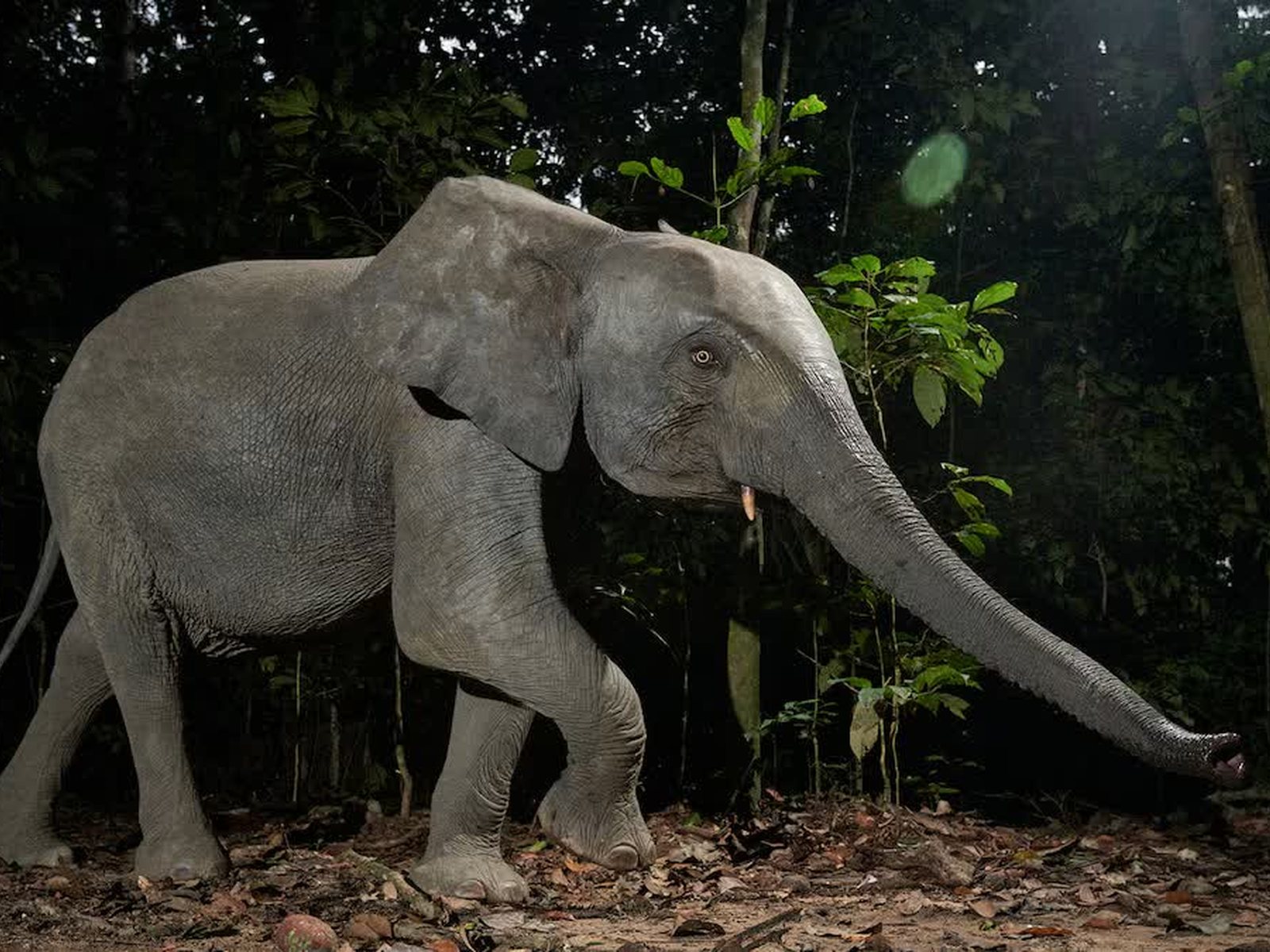
Beyond bonobos, Tumba-Lediima protects forest elephants, chimpanzees, sitatunga, and forest buffalo across some of the most important swamp forest on the planet, alongside migratory bird populations that make Lake Tumba a key habitat.
The reserve forms part of the wider Ramsar-listed Triangle de la Ngiri wetland alongside the neighbouring Ngiri Triangle Nature Reserve; see our Lomako-Yokokala Faunal Reserve guide for another significant bonobo habitat in the wider region.
What makes Tumba-Lediima distinct
Tumba-Lediima's swamp forest ecosystem holds one of the densest known bonobo populations anywhere.
High-density bonobo population
Survey work here revealed the highest bonobo density and largest group sizes recorded anywhere in the species' range.
Forest elephants
Forest elephants persist within the reserve's swamp and dry-land forest mosaic.
Chimpanzees
On the right bank of the Congo River, chimpanzee populations share habitat with grey-cheeked mangabeys.
Sitatunga & forest buffalo
These wetland-adapted species thrive in the reserve's extensive swamp forest habitat.
Migratory waterbirds
Lake Tumba is a key stopover for migratory bird species moving through the Congo Basin.
Colobus & guenon diversity
Angolan colobus, golden-bellied mangabey, and several guenon species round out the reserve's primate diversity.
How a Tumba-Lediima visit comes together
Access to this swamp forest reserve is primarily by water, given the extensive wetland terrain.
Travel to Mbandaka
Mbandaka, on the Congo River, is the main gateway to the Lac Tumba landscape.
Boat travel to Lake Tumba
Onward travel to the reserve is largely by boat through the region's rivers and swamp channels.
Coordinate with ICCN and WWF site staff
Given the reserve's technical management structure, visits are best arranged in advance with site management.
Guided swamp forest exploration
Boat-based and limited walking exploration reveals the reserve's bonobo, elephant, and bird populations.
Return via Mbandaka
Departures retrace the river route back to Mbandaka.
High conservation value, and a complicated relationship with local communities
Tumba-Lediima has faced documented tension between conservation restrictions and the livelihoods of communities who depend on the reserve's forest resources; a WWF-ICCN review found the 2006 creation process included limited prior community consultation.
Three logging concessions and an oil exploration permit currently overlap parts of the reserve, an unusual situation among DRC's protected areas that ongoing management efforts are working to address. See our travel guide for current conditions.
Planning questions, answered
Why is Tumba-Lediima significant for bonobo conservation?
Survey work here found the highest bonobo density and largest group sizes recorded anywhere in the species' range.
When was the reserve established?
Designated in 2006, though it was not officially opened until 2011.
How do I reach Tumba-Lediima?
Via Mbandaka on the Congo River, followed by boat travel through the Lac Tumba landscape's rivers and swamp channels.
Is Tumba-Lediima a Ramsar wetland?
It forms part of the wider Ramsar-listed Triangle de la Ngiri wetland alongside the neighbouring Ngiri Triangle Nature Reserve.
What are the reserve's main conservation challenges?
Overlapping logging concessions and an oil exploration permit, alongside historic tension over limited community consultation during the reserve's creation.
More of the DRC to plan around Tumba-Lediima
Considering a visit to the Lac Tumba landscape?
Our team coordinates river access from Mbandaka and current guidance for visiting Tumba-Lediima Nature Reserve.
What to do here
Top experiences in Tumba-Lediima Nature Reserve
- High-density bonobo populationSurvey work here revealed the highest bonobo density and largest group sizes recorded anywhere in the species' range.
- Forest elephantsForest elephants persist within the reserve's swamp and dry-land forest mosaic.
- ChimpanzeesOn the right bank of the Congo River, chimpanzee populations share habitat with grey-cheeked mangabeys.
- Sitatunga & forest buffaloThese wetland-adapted species thrive in the reserve's extensive swamp forest habitat.
Entry requirements for visiting Tumba-Lediima Nature Reserve
Every traveller needs a visa in advance. Read our step-by-step DRC e-visa and Congo tourist visa guide for the official DGM portal walkthrough, letter of invitation (LOI) requirements, fees, processing times and airport entry checks.
Nearby & similar
Related destinations