Lomako-Yokokala Faunal Reserve
One of the longest-running bonobo research sites in the world, gazetted in 2006, where decades of ranger patrols are showing measurable recovery in wildlife populations.
Fifty years of bonobo research in one forest
Lomako-Yokokala Faunal Reserve protects 3,625 km² of forest between the Lomako and Yokokala rivers in Equateur Province, and holds one of the longest continuous bonobo research records anywhere, with scientific study dating back to 1974.
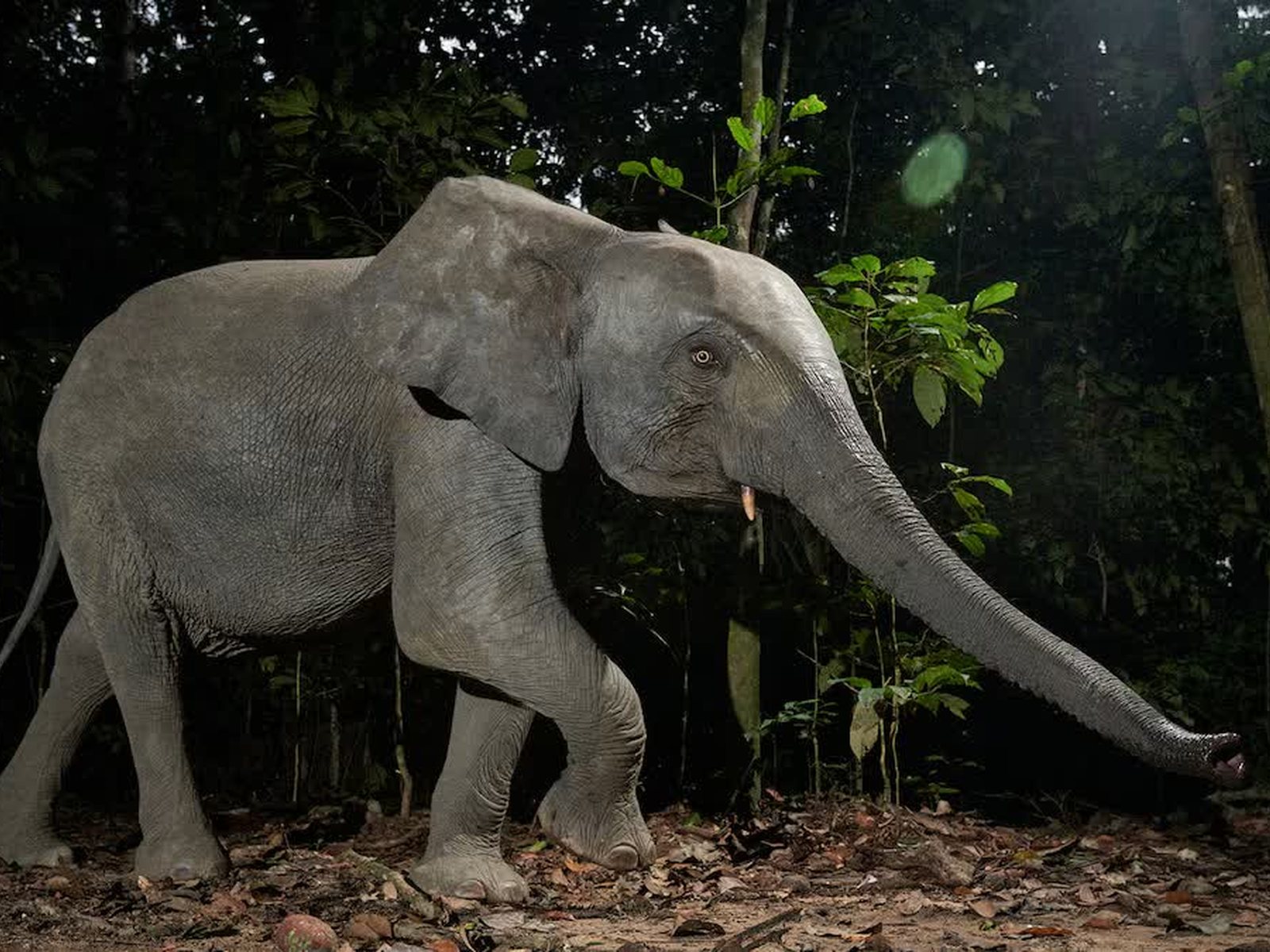
The reserve was formally gazetted in 2006 after roughly fifteen years of process, led by the African Wildlife Foundation working with ICCN, and is home to an estimated 1,000 bonobos alongside the endemic Congo peacock, golden cat, giant pangolin, and around ten primate species.
A 2023 survey replicating 2010 methodology found encouraging results: encounter rates for most target species had increased since 2010, with several monkey and duiker species showing at least fourfold rises, while signs of hunting had declined, a sign that sustained ranger patrols since 2006 are working.
There is no tourist infrastructure beyond the Iyema scientific research camp; visits are arranged as expeditions rather than conventional tours. Pair this guide with our Kokolopori Bonobo Reserve page for a comparison of bonobo viewing options.
What makes Lomako-Yokokala distinct
Half a century of research has made Lomako-Yokokala one of the best-understood bonobo habitats in the Congo Basin.
Bonobos
An estimated 1,000 bonobos live in the reserve, studied continuously since 1974 by Belgian, German, and American research institutions.
Congo peacock
The endemic Congo peafowl is among the reserve's flagship protected species.
Golden cat
The elusive African golden cat is one of ten primate-adjacent carnivore and mammal species recorded in the reserve.
Giant pangolin
Lomako-Yokokala protects populations of the giant pangolin, one of Africa's most heavily trafficked mammals.
Ten primate species
Beyond bonobos, the reserve supports a wide range of monkey species across its forest habitat.
Forest bird diversity
Mist-netting surveys have recorded well over 60 bird species in the reserve's primary forest understorey.
How a Lomako-Yokokala research visit comes together
Access is genuinely remote: expect several days of river travel from Mbandaka, with the Iyema research camp as the only base.
Travel to Mbandaka
Flights connect to Mbandaka, gateway to the Congo River system in Equateur Province.
Multi-day river journey
Roughly five days of river travel via the Congo, Lulonga, Maringa, and Lomako rivers reach the reserve, or a chartered flight to a nearby airstrip followed by motorbike and canoe travel.
Base at Iyema research camp
The scientific camp of Iyema, run with the Antwerp ZOO Centre for Research and Conservation, is the only base for visits.
Guided bonobo tracking
Local trackers lead daily searches for habituated bonobo groups through the reserve's forest.
Return via river or charter
Departures retrace the river route or connect via charter flight from Basankusu or Boende.
A rare success story in long-term ranger patrolling
Since ranger patrols began in 2006, Lomako-Yokokala has shown a clearer conservation trajectory than many DRC protected areas, with a 2025 study in the journal PARKS documenting measurable population recovery across the decade to 2023.
The African Wildlife Foundation continues to support ICCN patrols and community enterprise programmes designed to reduce hunting pressure on the reserve's wildlife. See our travel guide for current access conditions.
Planning questions, answered
How long has bonobo research happened at Lomako-Yokokala?
Since 1974, making it one of the longest-running bonobo research sites in the world.
How many bonobos live in the reserve?
An estimated 1,000 bonobos, alongside around ten other primate species.
How do I get to Lomako-Yokokala?
Via Mbandaka, followed by roughly five days of river travel, or a charter flight to Basankusu or Boende followed by motorbike and canoe travel.
Is there accommodation in the reserve?
Only the Iyema scientific research camp; there are no hotels or lodges, so visits are arranged as expeditions with a specialist operator.
Has conservation here been effective?
Yes. A 2025 study found encounter rates for most target species had increased since 2010, alongside a decline in hunting signs, following ranger patrols since 2006.
More of the DRC to plan around Lomako-Yokokala
Considering a bonobo research expedition to Lomako-Yokokala?
Our team coordinates the river logistics and Iyema camp access needed for one of DRC's most established bonobo sites.
What to do here
Top experiences in Lomako-Yokokala Faunal Reserve
- BonobosAn estimated 1,000 bonobos live in the reserve, studied continuously since 1974 by Belgian, German, and American research institutions.
- Congo peacockThe endemic Congo peafowl is among the reserve's flagship protected species.
- Golden catThe elusive African golden cat is one of ten primate-adjacent carnivore and mammal species recorded in the reserve.
- Giant pangolinLomako-Yokokala protects populations of the giant pangolin, one of Africa's most heavily trafficked mammals.
Entry requirements for visiting Lomako-Yokokala Faunal Reserve
Every traveller needs a visa in advance. Read our step-by-step DRC e-visa and Congo tourist visa guide for the official DGM portal walkthrough, letter of invitation (LOI) requirements, fees, processing times and airport entry checks.
Nearby & similar
Related destinations