Tayna Nature Reserve
Built around a community-run conservation biology university, Tayna pioneered locally led gorilla conservation in eastern DRC and remains a model studied across the region.
The reserve that built its own university
Tayna Nature Reserve was created in 1998 through the customary authority of local North Kivu communities, becoming one of DRC's earliest examples of community-managed conservation, alongside its neighbour Kisimba-Ikobo Primate Reserve.
What sets Tayna apart is its investment in local capacity: the community established the Tayna Center for Conservation Biology (TCCB) in the nearby 'conservation action village' of Kasugho, which has granted more than 200 degrees in conservation biology to date.
Kasugho has grown into a genuine conservation hub, with a health clinic, a community-run radio station, and a hydroelectric plant, alongside a gorilla rehabilitation centre developed to support the reserve's Grauer's gorilla population.
Since 2003, a broader community conservation programme has integrated livelihoods and forest protection, later expanded into a REDD+ carbon credits project covering both Tayna and Kisimba-Ikobo's combined 330,000 hectares.
What makes Tayna distinct
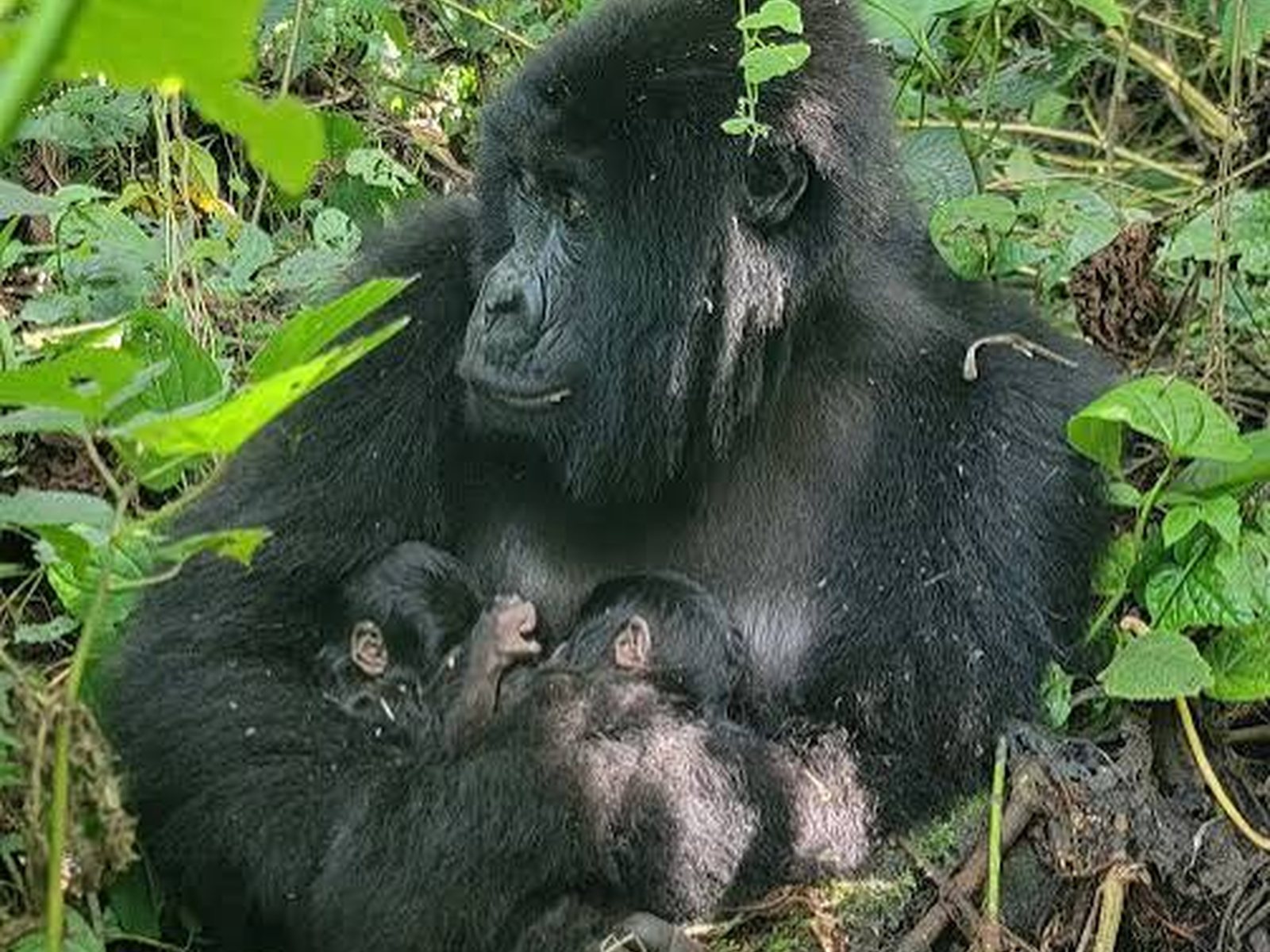
Tayna protects a slice of the Grauer's gorilla range at the heart of a broader community conservation landscape.
Grauer's gorillas
Tayna forms part of the connected forest corridor supporting eastern DRC's Grauer's gorilla population, alongside Kisimba-Ikobo and Maiko.
Eastern chimpanzees
Chimpanzee populations share the reserve's forest with its gorilla groups.
Gorilla rehabilitation programme
A rehabilitation centre in Kasugho supports orphaned and injured gorillas connected to the wider conservation landscape.
Forest biodiversity
Tayna's intact forest supports a range of Albertine Rift species alongside its flagship great apes.
Community conservation infrastructure
Kasugho's clinic, radio station, and hydroelectric plant demonstrate conservation directly tied to local development.
Conservation education legacy
Over 200 conservation biology graduates from TCCB now work across DRC's protected area network.
How a Tayna Nature Reserve visit comes together
Visits are best arranged directly with the community conservation programme based in Kasugho.
Travel to a North Kivu access town
Routes typically approach via Goma or Butembo, depending on current road and security conditions.
Continue to Kasugho
Kasugho, the reserve's conservation action village, is the hub for coordinating any visit.
Visit the Tayna Center for Conservation Biology
A stop at TCCB introduces the reserve's community-led conservation model and training programme.
Guided forest and gorilla area walks
Local guides lead walks through the reserve's forest, with visits to the gorilla rehabilitation programme where appropriate.
Return via the same access route
Departures retrace the route back through Kasugho to Goma or Butembo.
A template for locally led conservation in DRC
Tayna's model, pairing forest protection with direct investment in community education, healthcare, and infrastructure, has been studied widely as an alternative to top-down park management in conflict-affected regions of eastern DRC.
The reserve's REDD+ carbon financing project, running through 2029, funds ongoing livelihood programmes designed to reduce pressure on the forest. See our travel guide for current conditions.
Planning questions, answered
What makes Tayna Nature Reserve unusual?
It was one of the first community-managed reserves in DRC, and it built its own conservation biology university, the Tayna Center for Conservation Biology, in the village of Kasugho.
What wildlife does Tayna protect?
Grauer's gorillas and eastern chimpanzees, alongside broader Albertine Rift forest biodiversity.
How is the reserve funded?
Partly through a REDD+ carbon credits project covering Tayna and neighbouring Kisimba-Ikobo, running through 2029.
Is there a gorilla rehabilitation centre at Tayna?
Yes, a gorilla rehabilitation programme operates in Kasugho, connected to the wider conservation landscape.
How do I arrange a visit to Tayna?
Through direct coordination with the community conservation programme based in Kasugho, given the reserve's limited formal tourism infrastructure.
More of the DRC to plan around Tayna
Interested in visiting Tayna Nature Reserve?
Our team coordinates directly with the Kasugho conservation programme and current North Kivu access guidance.
What to do here
Top experiences in Tayna Nature Reserve
- Grauer's gorillasTayna forms part of the connected forest corridor supporting eastern DRC's Grauer's gorilla population, alongside Kisimba-Ikobo and Maiko.
- Eastern chimpanzeesChimpanzee populations share the reserve's forest with its gorilla groups.
- Gorilla rehabilitation programmeA rehabilitation centre in Kasugho supports orphaned and injured gorillas connected to the wider conservation landscape.
- Forest biodiversityTayna's intact forest supports a range of Albertine Rift species alongside its flagship great apes.
Entry requirements for visiting Tayna Nature Reserve
Every traveller needs a visa in advance. Read our step-by-step DRC e-visa and Congo tourist visa guide for the official DGM portal walkthrough, letter of invitation (LOI) requirements, fees, processing times and airport entry checks.
Nearby & similar
Related destinations