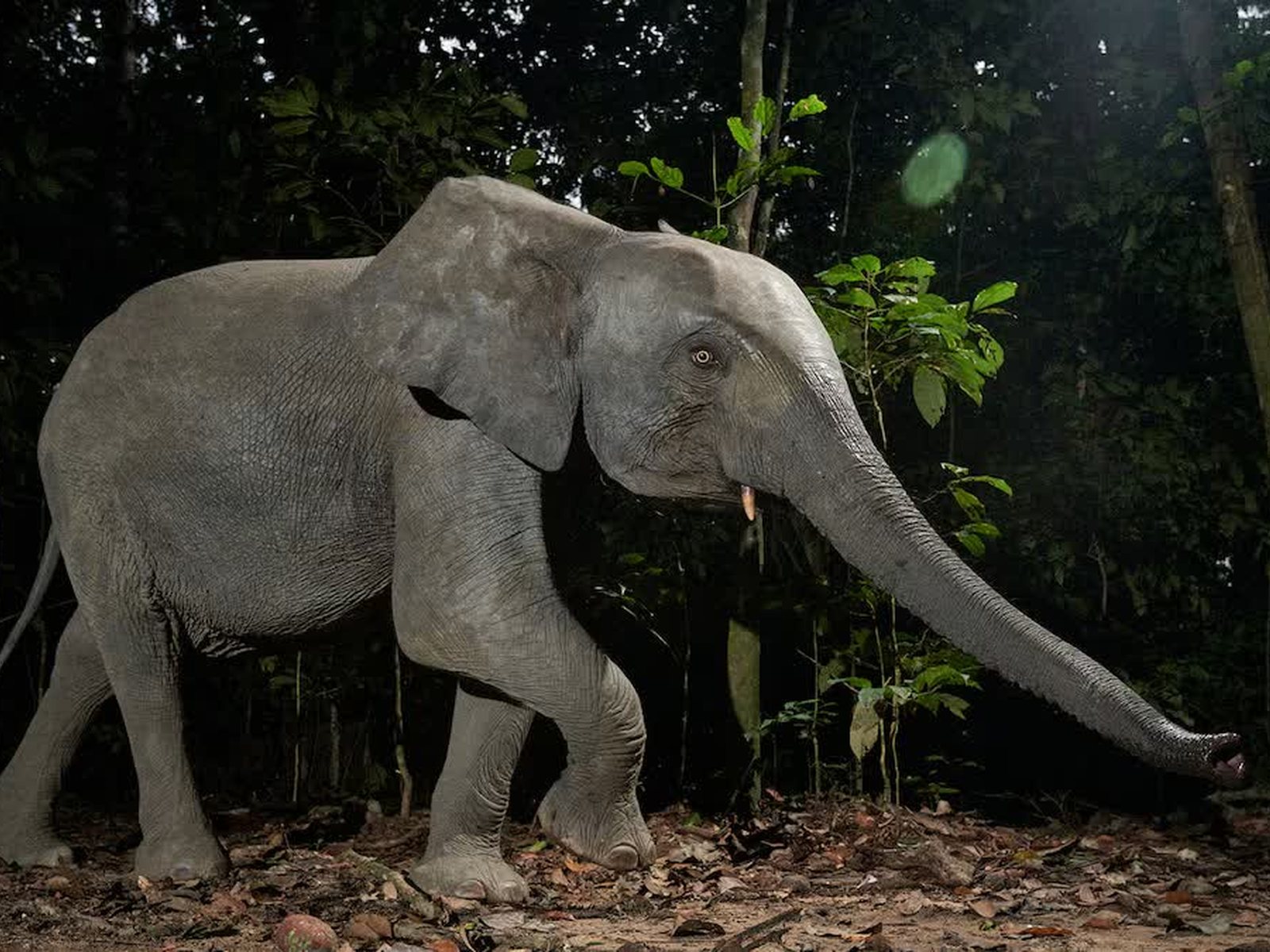
Kokolopori Bonobo Reserve
Home to four habituated bonobo communities and 35 partner villages, Kokolopori is one of the most accessible places in the world to observe wild bonobos.
The Congo's most researched bonobo reserve
Kokolopori Bonobo Reserve spans 4,875 km² in the Djolu Territory of Tshuapa Province, encompassing the 35 villages of Kokolopori, and was formally recognised as a protected area by the DRC government in May 2009 after a community-driven conservation process supported by the Bonobo Conservation Initiative.
The reserve holds an estimated 1,000 to 1,800 bonobos, and is one of the few places where visitors can reliably observe habituated wild bonobo groups, thanks to habituation work that began near Yetee village in 2007.
Four bonobo communities, known as Ekalakala, Kokoalongo, Fekako, and Bekako, are habituated to researcher presence, and since 2016 the Kokolopori Bonobo Research Project has run with scientists from Harvard University and the Max Planck Institute for Evolutionary Anthropology.
The reserve was also the site of the first study of the rare Salongo (dryas) monkey, protected locally by the surrounding communities; see our Lomako-Yokokala Faunal Reserve guide for another long-running bonobo research site in the same landscape.
What makes Kokolopori distinct
Kokolopori's habituated bonobo communities make it one of the more reliable bonobo-viewing destinations in the DRC.
Habituated bonobo groups
Four communities, Ekalakala, Kokoalongo, Fekako, and Bekako, are habituated to human presence, making sightings more likely than in most bonobo habitat.
Ongoing scientific research
The Kokolopori Bonobo Research Project, run with Harvard and Max Planck Institute scientists since 2016, studies the reserve's habituated groups.
Dryas (Salongo) monkey
Kokolopori was the site of the first study of this rare, little-known primate, protected by local communities.
Community-run conservation
35 partner villages participate directly in the reserve's governance and benefit-sharing structure.
Peace Forest landscape
Kokolopori forms part of the wider Bonobo Peace Forest, a network of community-managed reserves protecting bonobo habitat.
Forest biodiversity
Beyond bonobos, the reserve's forest supports a range of other primates and Congo Basin wildlife.
How a Kokolopori bonobo visit comes together
Kokolopori is reached via Mbandaka or Kinshasa, followed by charter flight or overland travel into Djolu Territory.
Travel to Mbandaka or Kinshasa
Most routes connect through Mbandaka or directly from Kinshasa toward Tshuapa Province.
Onward travel to Djolu Territory
Charter flight or overland travel reaches the reserve's access points around Kokolopori's partner villages.
Village and reserve orientation
Visits typically begin with an introduction to the reserve's community governance and research programme.
Guided bonobo tracking
Local trackers lead visitors to habituated bonobo communities for observation.
Return via the same route
Departures retrace the route back to Mbandaka or Kinshasa.
A community-led conservation success in the Congo Basin
Kokolopori's creation followed a grassroots model, with the Bonobo Conservation Initiative supporting local communities to establish protected status and long-term governance over their own forest, rather than a top-down park designation.
Ongoing scientific partnerships with Harvard University and the Max Planck Institute continue to generate research that informs bonobo conservation more broadly across the DRC. See our travel guide for current access conditions.
Planning questions, answered
Can visitors reliably see bonobos at Kokolopori?
Yes, more reliably than in most bonobo habitat, thanks to four habituated communities tracked daily by local guides.
How many bonobos live in the reserve?
An estimated 1,000 to 1,800 bonobos across the reserve's 4,875 km².
When was Kokolopori established?
Formally recognised as a protected area by the DRC government in May 2009, following community-led conservation efforts beginning years earlier.
Who runs the research at Kokolopori?
The Kokolopori Bonobo Research Project, active since 2016, is led by scientists from Harvard University and the Max Planck Institute for Evolutionary Anthropology.
How is the reserve governed?
Through a community-based model involving the 35 villages of Kokolopori, supported by the Bonobo Conservation Initiative.
More of the DRC to plan around Kokolopori
Ready to plan a bonobo visit to Kokolopori?
Our team coordinates access into Djolu Territory and current guidance for visiting the reserve's habituated bonobo communities.
What to do here
Top experiences in Kokolopori Bonobo Reserve
- Habituated bonobo groupsFour communities, Ekalakala, Kokoalongo, Fekako, and Bekako, are habituated to human presence, making sightings more likely than in most bonobo habitat.
- Ongoing scientific researchThe Kokolopori Bonobo Research Project, run with Harvard and Max Planck Institute scientists since 2016, studies the reserve's habituated groups.
- Dryas (Salongo) monkeyKokolopori was the site of the first study of this rare, little-known primate, protected by local communities.
- Community-run conservation35 partner villages participate directly in the reserve's governance and benefit-sharing structure.
Entry requirements for visiting Kokolopori Bonobo Reserve
Every traveller needs a visa in advance. Read our step-by-step DRC e-visa and Congo tourist visa guide for the official DGM portal walkthrough, letter of invitation (LOI) requirements, fees, processing times and airport entry checks.
Nearby & similar
Related destinations