Sankuru Nature Reserve
Larger than Belgium, Sankuru is the world's largest continuous protected area for great apes, and the first large-scale community-managed reserve in DRC.
A reserve larger than most countries in Europe
Gazetted by ministerial decree on 6 November 2007, Sankuru Nature Reserve spans 30,570 km², larger than the US state of Massachusetts or the country of Belgium, making it the world's largest continuous protected area for great apes.
The reserve grew from a grassroots movement led by the local NGO Action Communautaire pour les Primates du Kasaï (ACOPRIK), formed in 2001 to address hunting pressure on primates, later supported by the Bonobo Conservation Initiative to secure protected status.
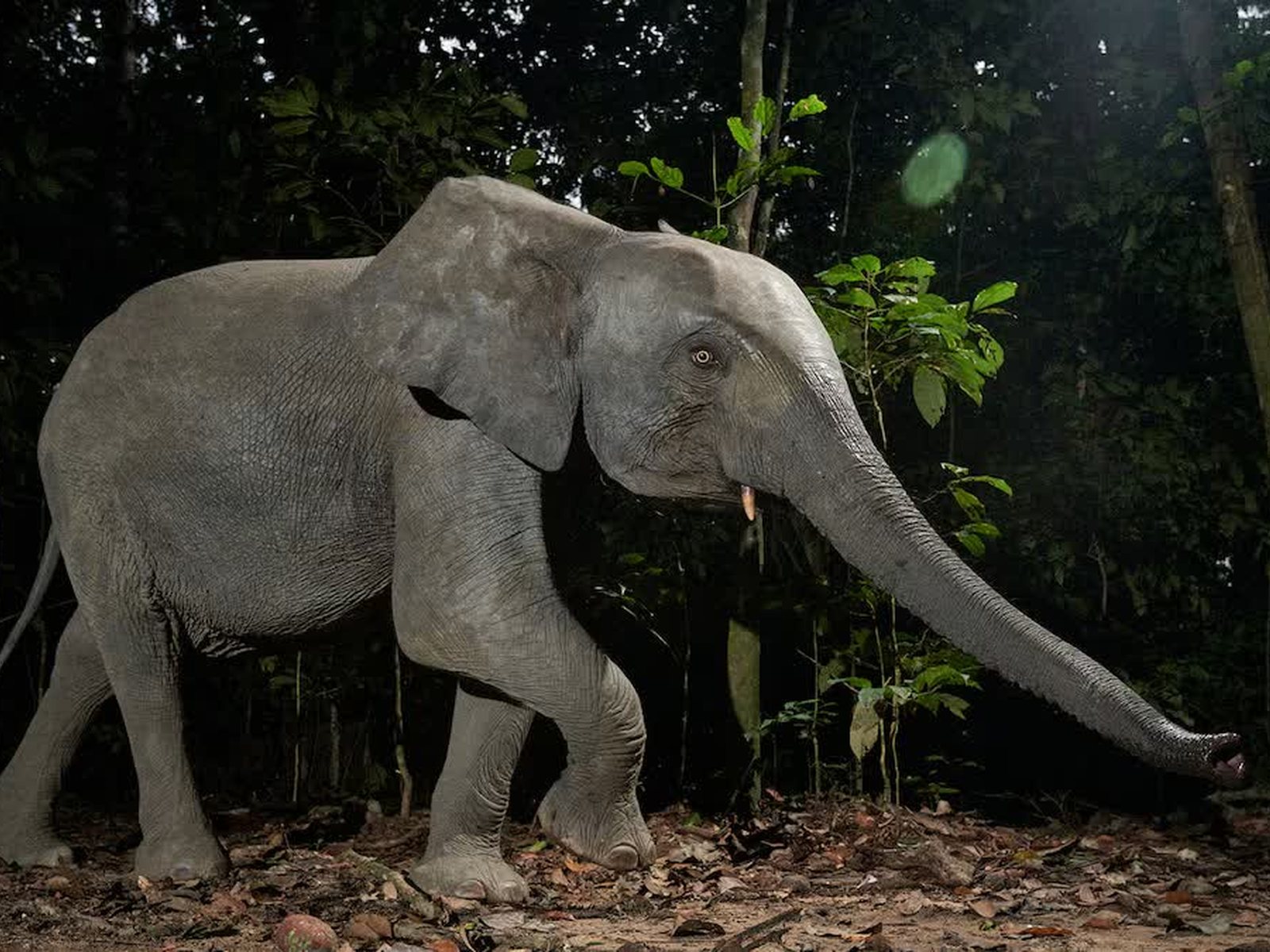
Sankuru protects bonobos alongside okapi, discovered here in 2006 by survey teams well outside their previously known range, and African forest elephants, plus at least ten other primate species including the rare owl-faced monkey.
Sankuru was the recipient of DRC's first REDD+ (Reducing Emissions from Deforestation and Degradation) contract, tying its conservation directly to global climate finance; pair this guide with our Kokolopori Bonobo Reserve page for another community-run bonobo destination in the wider landscape.
What makes Sankuru distinct
Sankuru's sheer scale makes it a critical corridor for great ape populations across the central Congo Basin.
Bonobos
Sankuru's forest holds a significant bonobo population, part of the reserve's core purpose alongside forest connectivity.
Okapi
A 2006 survey confirmed okapi presence here, well outside their previously known range, a notable discovery for the species.
African forest elephants
Forest elephants persist in Sankuru, an increasingly rare presence given hunting pressure elsewhere in DRC.
Owl-faced monkey
Among at least ten primate species recorded, the striking owl-faced monkey is one of Sankuru's more sought-after sightings.
Blue monkey
Blue monkeys and several other guenon species share the reserve's forest with its flagship great apes.
Watershed protection
Sankuru protects the Sankuru and Lokenye river basins, safeguarding water flows across the wider Congo Basin.
How a Sankuru Nature Reserve visit comes together
Sankuru remains lightly visited; itineraries are arranged directly with ACOPRIK, BCI, or a specialist operator familiar with the region.
Travel to a regional access town
Routes typically approach via towns in the wider Sankuru or Kasaï region, depending on current conditions.
Coordinate with community reserve partners
Given the reserve's community-led governance, visits are best arranged directly through ACOPRIK or the Bonobo Conservation Initiative.
Overland or river travel to the reserve
Access depends on the specific sector of this vast reserve being visited.
Guided forest and wildlife walks
Local guides lead walks focused on bonobo, okapi, and forest elephant sign.
Return via the same access route
Departures retrace the route back to the nearest regional hub.
Pioneering REDD+ conservation at continental scale
As the first large-scale community-managed protected area in DRC, Sankuru heralded a new model for rainforest conservation, though deforestation along the roads crossing the reserve has continued to fragment parts of its forest cover.
Sankuru's REDD+ contract ties its protection directly to reducing global greenhouse gas emissions, given that deforestation accounts for a significant share of annual emissions worldwide. See our travel guide for current access conditions.
Planning questions, answered
How large is Sankuru Nature Reserve?
30,570 km², making it the world's largest continuous protected area for great apes, larger than Belgium.
When was Sankuru established?
Gazetted by ministerial decree on 6 November 2007, following a grassroots conservation campaign that began in 2001.
What is Sankuru's REDD+ status?
It was the recipient of DRC's first REDD+ contract, linking its protection to global climate finance for reducing deforestation.
Is okapi found in Sankuru?
Yes. A 2006 survey confirmed okapi presence in Sankuru, notably outside the species' previously known range.
How do I arrange a visit to Sankuru?
Through direct coordination with community conservation partners such as ACOPRIK or the Bonobo Conservation Initiative, given the reserve's limited formal tourism infrastructure.
More of the DRC to plan around Sankuru
Considering a visit to Sankuru Nature Reserve?
Our team coordinates with community conservation partners and current access guidance for this vast reserve.
What to do here
Top experiences in Sankuru Nature Reserve
- BonobosSankuru's forest holds a significant bonobo population, part of the reserve's core purpose alongside forest connectivity.
- OkapiA 2006 survey confirmed okapi presence here, well outside their previously known range, a notable discovery for the species.
- African forest elephantsForest elephants persist in Sankuru, an increasingly rare presence given hunting pressure elsewhere in DRC.
- Owl-faced monkeyAmong at least ten primate species recorded, the striking owl-faced monkey is one of Sankuru's more sought-after sightings.
Entry requirements for visiting Sankuru Nature Reserve
Every traveller needs a visa in advance. Read our step-by-step DRC e-visa and Congo tourist visa guide for the official DGM portal walkthrough, letter of invitation (LOI) requirements, fees, processing times and airport entry checks.
Nearby & similar
Related destinations