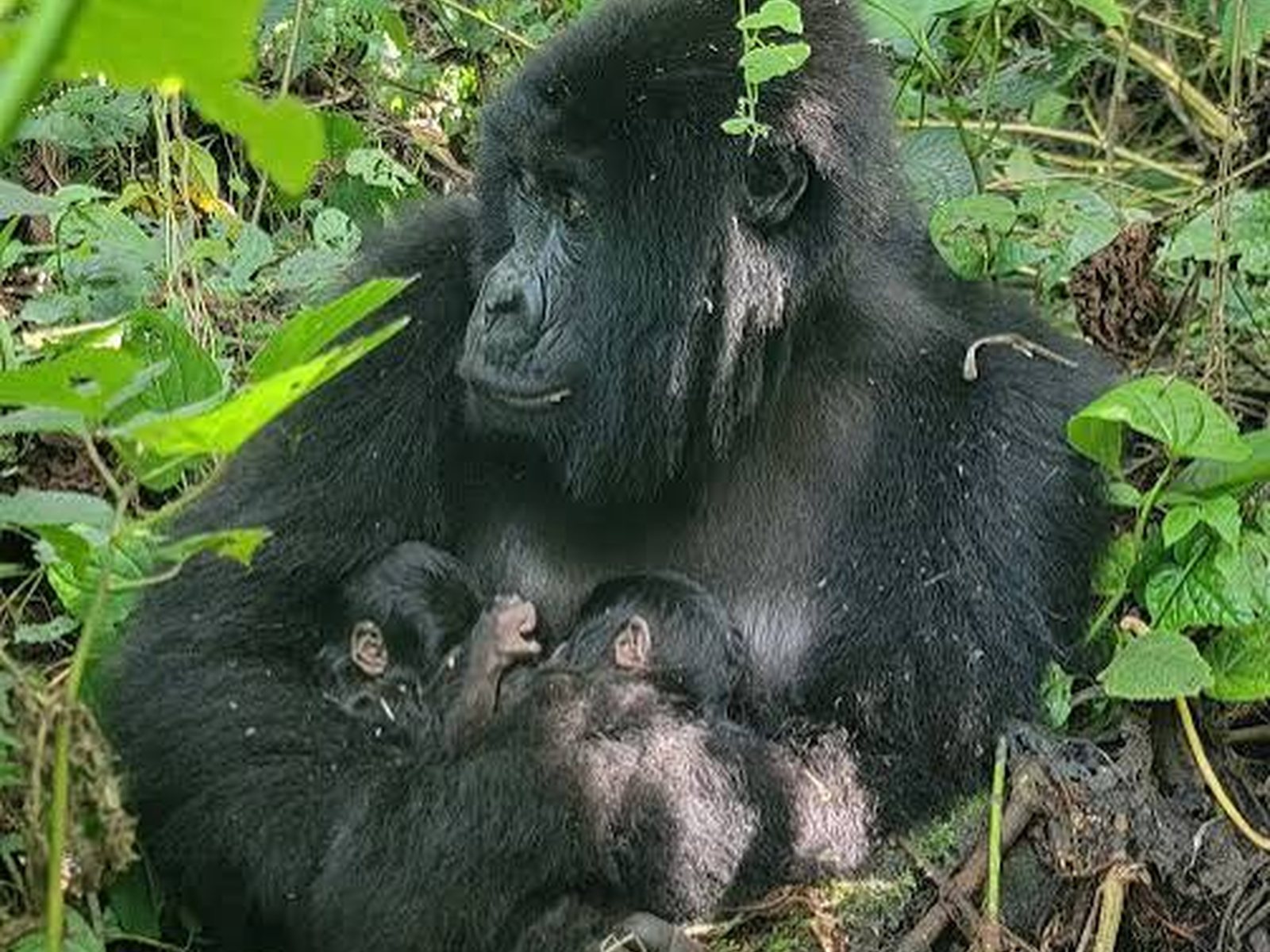
Kabobo Wildlife Reserve
A biodiversity hotspot on the Misotshi-Kabogo massif above Lake Tanganyika, home to species new to science and an endemic bird found nowhere else on Earth.
A protected area born from a decade of community negotiation
Kabobo Wildlife Reserve covers roughly 570 square miles of the southern Misotshi-Kabogo massif in the Albertine Rift region above Lake Tanganyika, and was formally approved by the Governor of Tanganyika Province in December 2016 after years of collaboration between the Wildlife Conservation Society, local communities, and traditional Batwa leadership.
Belgian researchers first catalogued the endemic Kabobo apalis bird here in the 1950s, but decades of conflict kept the area largely off-limits to scientific study until a 2007 Wildlife Conservation Society survey turned up four mammal species and three plant species new to science.
Kabobo forms part of a connected conservation landscape with the adjoining Ngandja and Luama Katanga reserves; together, the three protected areas shelter an estimated 2,500 chimpanzees alongside hippos, elephants, and lions across roughly 6,951 km² of combined habitat.
With 34 globally threatened species and 110 species endemic to the Albertine Rift recorded here, Kabobo ranks among the region's most important, and least-visited, biodiversity strongholds; see our Itombwe Nature Reserve guide for the neighbouring Albertine Rift reserve to the north.
What makes Kabobo Wildlife Reserve distinct
Kabobo's isolation during decades of conflict left much of its biodiversity undocumented until recent surveys.
Kabobo apalis
This small bird, first catalogued in the 1950s, is found nowhere else in the world outside the Kabobo massif.
Eastern chimpanzees
Kabobo and its adjoining reserves together protect an estimated 2,500 chimpanzees, one of the region's largest populations.
Prigogine's colobus
This subspecies of Angolan colobus monkey, discovered in the 1950s, is among Kabobo's signature primates.
Species new to science
A 2007 survey identified four mammal and three plant species previously unknown, with more likely still undocumented.
Batwa cultural heritage
The Batwa people, roughly 20% of the local population across 37 villages, have shaped and continue to co-manage the reserve.
Lake Tanganyika watershed
Kabobo forms part of the largest forest and water catchment feeding Lake Tanganyika, a globally significant freshwater system.
How a Kabobo Wildlife Reserve visit comes together
Kabobo remains lightly visited; itineraries are arranged directly with conservation partners and local guides.
Travel to Kalemie or Uvira
Lake Tanganyika's shoreline towns serve as the main access points to the Misotshi-Kabogo massif.
Overland approach to the massif
Road and trail travel connects the lakeshore to the reserve's boundary, best arranged with a local guide.
Guided forest walks
Walks through Kabobo's forest and woodland introduce the massif's endemic plant and animal species.
Birdwatching for endemics
Guided birding focuses on the Kabobo apalis and other Albertine Rift endemic species.
Cultural engagement with Batwa communities
Guided cultural visits connect travellers with the Batwa communities central to the reserve's co-management.
A model for participatory conservation in eastern DRC
Kabobo's creation stands out for its process: the Wildlife Conservation Society worked with local leaders, including Batwa elders, over several years to define the reserve's boundaries in a way that recognised traditional land rights.
This co-management approach, formalised under DRC's forestry law, is now viewed as a template for community forest concessions elsewhere in the country. See our travel guide for current access conditions.
Planning questions, answered
What is the Kabobo apalis?
A small bird species first documented in the 1950s and found only on the Kabobo massif, one of the reserve's flagship endemic species.
When was Kabobo Wildlife Reserve established?
Its boundaries were formally approved by the Governor of Tanganyika Province in December 2016, following years of community consultation.
How many chimpanzees live in the area?
Kabobo and its adjoining Ngandja and Luama Katanga reserves together are estimated to hold around 2,500 chimpanzees.
How is the reserve managed?
Through co-management between local communities, including Batwa traditional leadership, and Congolese wildlife authorities, supported by the Wildlife Conservation Society.
Is Kabobo developed for tourism?
Not extensively. Visits are best arranged with conservation partners and local guides given the reserve's limited infrastructure.
More of the DRC to plan around Kabobo Wildlife Reserve
Ready to explore the Kabobo massif?
Our team routes Kabobo alongside Lake Tanganyika's shoreline towns and current guidance for Tanganyika Province.
What to do here
Top experiences in Kabobo Wildlife Reserve
- Kabobo apalisThis small bird, first catalogued in the 1950s, is found nowhere else in the world outside the Kabobo massif.
- Eastern chimpanzeesKabobo and its adjoining reserves together protect an estimated 2,500 chimpanzees, one of the region's largest populations.
- Prigogine's colobusThis subspecies of Angolan colobus monkey, discovered in the 1950s, is among Kabobo's signature primates.
- Species new to scienceA 2007 survey identified four mammal and three plant species previously unknown, with more likely still undocumented.
Entry requirements for visiting Kabobo Wildlife Reserve
Every traveller needs a visa in advance. Read our step-by-step DRC e-visa and Congo tourist visa guide for the official DGM portal walkthrough, letter of invitation (LOI) requirements, fees, processing times and airport entry checks.
Nearby & similar
Related destinations