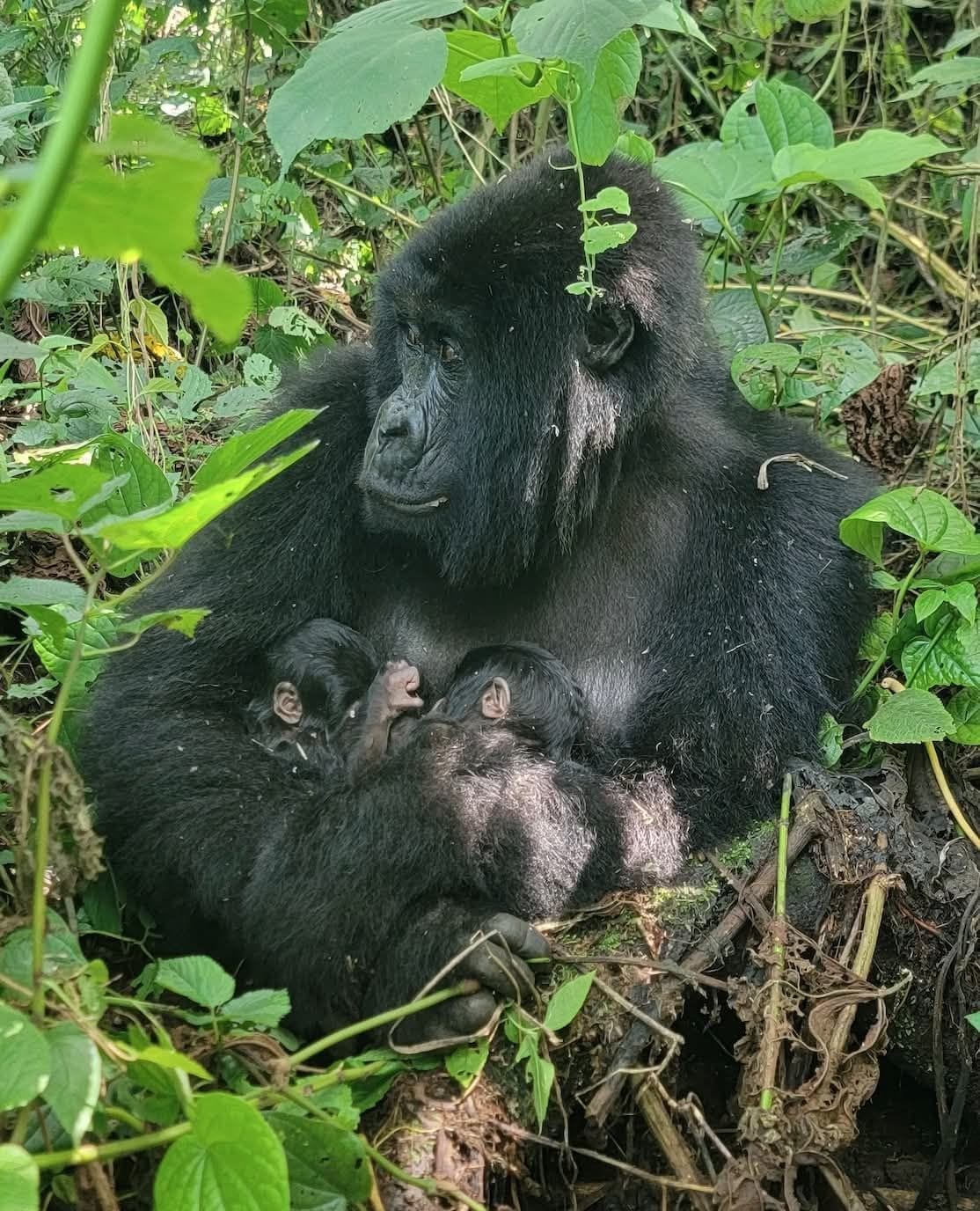
The Virunga National Park, located in eastern Democratic Republic of Congo, is celebrating an extraordinary conservation milestone: the birth of twin mountain gorillas to Maman Fuko, a female gorilla from the renowned Bageni family.
The twins were observed on January 3, 2026, by community wildlife trackers during a routine monitoring patrol—marking the park's first recorded gorilla births of the year and one of the rarest reproductive events among mountain gorillas.
Twin births are exceptionally rare in mountain gorillas, making Maman Fuko's delivery a remarkable biological and conservation success for Virunga.
The Bageni Family: The Largest Gorilla Group in Virunga
With the arrival of the twins born to Maman Fuko, the Bageni family now counts 59 individuals, officially confirming its status as the largest known group of mountain gorillas in Virunga National Park.
Given the vulnerability of newborn gorillas during their first weeks of life, park authorities immediately deployed reinforced monitoring and protection measures. Rangers and trackers are closely observing the mother and her twins while ensuring minimal human interference to preserve natural behaviors and bonding.
Why This Birth Matters for Mountain Gorilla Conservation
Mountain gorillas remain a critically endangered species, whose survival depends on long-term protection, habitat preservation, and community-led conservation.
The successful twin birth by Maman Fuko is a strong indicator of population health, reflecting the effectiveness of Virunga's conservation model, which combines ranger protection, scientific monitoring, and local community involvement.
This milestone also aligns with global biodiversity commitments such as the Kunming–Montreal Global Biodiversity Framework, particularly Target 4, which aims to halt human-driven extinction and restore threatened species through sustainable population management.
Virunga: A UNESCO World Heritage Stronghold of Biodiversity
As a designated UNESCO World Heritage Site, Virunga National Park stands among the most biodiverse protected areas on Earth. Beyond mountain gorillas, the park shelters chimpanzees, forest elephants, okapis, and thousands of endemic plant and bird species.
Despite mounting pressures from climate change and human activity, Virunga remains a global symbol of resilience and conservation excellence. "The birth of these twins is a powerful sign of hope, but it also reminds us of how fragile mountain gorillas remain and why continuous protection is essential," conservation actors within the park emphasized.
A Symbol of Hope for the Democratic Republic of Congo
The birth of twin gorillas by Maman Fuko goes far beyond wildlife news. It reinforces the Democratic Republic of Congo's role as Africa's biodiversity heartland and highlights how effective conservation can yield tangible results even in challenging environments.
For eco-tourism, this event further elevates Virunga's standing as one of the world's most important conservation destinations, where responsible tourism directly supports wildlife protection, ranger livelihoods, and surrounding communities.
Discover Gorilla Conservation Experiences in the DRC
Virunga's conservation success stories demonstrate why ethical, conservation-led tourism matters.
Discover mountain gorilla conservation experiences Learn how tourism supports rangers and local communities Explore the DRC's national parks and biodiversity sanctuaries
The birth of twin mountain gorillas to Maman Fuko in Virunga National Park is more than a rare biological event—it is a living testament to the power of sustained conservation, community vigilance, and global environmental responsibility.
In an era of biodiversity loss, Virunga reminds the world that when nature is protected, life thrives.