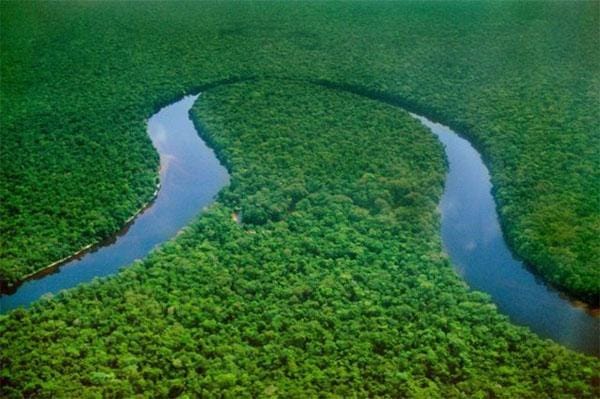
The Congo Basin is home to the world's second-largest tropical rainforest, one of the planet's greatest river systems and some of Africa's most extraordinary wildlife. At the geographical heart of this immense ecosystem lies the Democratic Republic of the Congo (DRC), which contains roughly 60% of the Congo Basin rainforest.
Covering the centre of the African continent, the Congo Basin is far more than a forest. It is a vast network of tropical rainforest, rivers, wetlands, peatlands, wildlife habitats and communities connected by one of the most powerful waterways on Earth: the Congo River.
For travellers interested in African rainforest expeditions, Congo River journeys, wildlife tourism, conservation travel and remote adventure, the Democratic Republic of the Congo represents one of the most important destinations within this extraordinary region.
## What is the Congo Basin?
The Congo Basin is the enormous geographical area drained by the Congo River and its many tributaries across Central Africa. Its tropical forests extend primarily across six countries:
- Democratic Republic of the Congo - Republic of the Congo - Cameroon - Central African Republic - Gabon - Equatorial Guinea
Together, these forests form the second-largest tropical rainforest system in the world after the Amazon. WWF describes the Congo Basin as one of the most biodiverse regions on Earth and estimates that its forests account for more than 70% of Africa's tropical forest cover.
But one country dominates the rainforest geographically.
## How much of the Congo Basin is in the DRC?
The Democratic Republic of the Congo contains roughly 60% of the Congo Basin rainforest, according to Rainforest Foundation UK. The country also contains Africa's largest expanse of tropical forest, which makes it the largest national custodian of the Congo Basin rainforest.
The Democratic Republic of the Congo covers approximately 2.34 million square kilometres, making it the second-largest country in Africa by land area. From immense equatorial forests and peatlands to rivers, savannahs, mountains and protected areas, the scale of the country's natural environment is difficult to appreciate until it is seen on a map.
For this reason, the DRC can legitimately be described as being at the ecological and geographical heart of the Congo Basin.
## The Congo River: the great artery of Central Africa
Running through this vast landscape is the Congo River, one of the world's great river systems. The Congo River and its tributaries extend for thousands of kilometres through Central Africa. WWF describes the river system as stretching around 4,700 kilometres, with the Congo River notable for crossing the Equator twice and eventually reaching the Atlantic at the DRC's coastline near Moanda.
The Congo is also generally recognised as:
- the world's second-largest river by discharge after the Amazon; - part of the world's second-largest river drainage basin; - one of the deepest known rivers on Earth; - one of Africa's greatest natural transport corridors.
For communities across the DRC, the river is not simply a geographical feature. It is transportation, food, commerce and culture. And increasingly, it represents an extraordinary opportunity for responsible expedition tourism and river exploration.
## Is the Congo Basin the same as the Democratic Republic of the Congo?
No. The Congo Basin is a transnational ecological and river region, while the Democratic Republic of the Congo is one of the countries located within it. However, because approximately 60% of the Congo Basin rainforest is situated inside the DRC, the country holds the largest single share of this ecosystem.
This distinction is important. The Congo Basin belongs to a wider Central African landscape, but the DRC occupies an exceptional position within it.
## Where does the name "Congo" come from?
The words Congo River, Congo Basin, Republic of the Congo and Democratic Republic of the Congo share a much older historical heritage. The name did not originate with the modern Democratic Republic of the Congo.
"Congo", historically written Kongo, is associated with the Kingdom of Kongo and the Kongo peoples, whose civilisation existed long before today's national borders. Over time, European geographical descriptions applied the name Congo to the great river connected with the region, and the modern Democratic Republic of the Congo later inherited this historic geographical name.
Today, however, the DRC contains the largest portion of the rainforest associated globally with the Congo Basin.
## Why is the Congo Basin so important to the world?
The Congo Basin matters far beyond Central Africa. Its forests help regulate climate, store enormous quantities of carbon, support rainfall systems and provide habitat for extraordinary biodiversity.
The landscape includes dense rainforest, rivers, flooded forests, savannahs, wetlands and some of the world's largest tropical peatlands. These ecosystems support tens of millions of people while contributing to global climate stability. This is why the Congo Basin is increasingly being discussed alongside the Amazon as one of the great natural systems whose protection has global consequences.
## Wildlife of the Congo Basin
The Congo Basin is one of the richest wildlife regions on Earth. Its forests support species including bonobos, gorillas, chimpanzees, forest elephants, okapi, pangolins, crocodiles, hippos and hundreds of species of birds and freshwater fish. WWF describes the basin as an important global centre for great ape diversity and a refuge for critically endangered forest elephants.
The Democratic Republic of the Congo has an especially important role because several remarkable species are closely associated with the country.
### Bonobos: found in the wild only in the DRC
The bonobo is one of humanity's closest living relatives, and its entire natural wild range lies within the Democratic Republic of the Congo. Visitors interested in primate conservation and rainforest tourism can therefore encounter bonobo conservation landscapes that simply cannot be replicated anywhere else on Earth.
### The okapi: an icon of Congolese biodiversity
The okapi is another extraordinary symbol of the DRC. Related to the giraffe but adapted to dense rainforest, the okapi is native to the forests of the Democratic Republic of the Congo. Its unusual appearance and limited natural distribution make it one of Africa's most distinctive mammals.
## Indigenous Peoples and local communities of the Congo Basin
The Congo Basin is not an untouched forest without people. Communities have lived alongside these forests and rivers for thousands of years. Indigenous forest peoples including BaAka, BaKa, BaMbuti and Efe communities possess generations of knowledge about forest ecology, wildlife, medicinal plants, navigation and survival. Their knowledge is increasingly important for conservation and responsible tourism.
For tourism to create lasting value, Indigenous Peoples and local communities should not simply be presented as attractions. They should participate as guides, conservation partners, cultural interpreters, entrepreneurs, boat operators, accommodation providers, artisans and decision-makers. Responsible tourism should create tangible local economic benefits while respecting community rights, cultures and consent.
## Adventure tourism is bringing new attention to the Congo Basin
The enormous scale and remoteness of the Congo Basin continue to attract international explorers. One of the latest is British adventurer and five-time world record holder Ash Dykes, who has announced that the first mission of his new Project 6 expedition series will take place in the Congo Basin in October 2026.
Dykes plans to kayak more than 700 kilometres along the Sangha River, travelling from Nola in the Central African Republic towards Mossaka in the Republic of the Congo, where the Sangha meets the Congo River. The kayaking expedition is expected to form part of roughly three weeks in the region, including preparations and time spent learning from BaAka communities before entering the river. His publicly available expedition information currently describes the mission as 700+ kilometres over approximately three weeks, rather than confirming a 16-day kayaking duration.
Importantly, the planned route is primarily through the Central African Republic and the Republic of the Congo, demonstrating that the Congo Basin is a shared Central African ecosystem rather than a single-country destination. DRCTOURISM is an independent Democratic Republic of Congo tourism platform; references to current explorers are editorial unless an official partnership is stated.
For the Democratic Republic of the Congo, this renewed global attention presents a wider opportunity: to tell the story of the country that contains the greatest share of the rainforest itself.
## Can you visit the Congo Basin in the DRC?
Yes, but travelling through the Congo Basin should be approached differently from conventional mass tourism. The DRC is enormous and travel conditions vary significantly by province and destination. Some regions are accessible through organised tourism, while very remote rainforest areas may require specialist logistics, permits, boats, local guides, conservation coordination and significant expedition planning.
Potential Congo Basin experiences in the DRC include:
- Congo River journeys - rainforest expeditions - bonobo conservation experiences - birdwatching - cultural and community tourism - scientific expeditions - photography expeditions - national parks and protected landscapes - river and wetland exploration - remote wilderness travel
Visitors should always verify current security, health, conservation and entry requirements before travelling.
## Why the DRC has exceptional potential for eco-tourism
The Democratic Republic of the Congo does not need to reproduce the tourism model of East or Southern Africa. Its greatest competitive advantage is different: rainforest, great rivers, endemic wildlife, culture, conservation and exploration in one country.
That opens the possibility of developing a distinctive tourism model centred on low-volume, high-value and conservation-led experiences. Instead of attempting to place large numbers of tourists inside fragile ecosystems, carefully managed expeditions could contribute financially to conservation and surrounding communities.
Such a model can potentially create employment for local:
- guides; - boat operators; - cooks; - trackers; - conservation staff; - artisans; - accommodation providers; - farmers; - transport operators; - community enterprises.
The objective should be simple: when tourism benefits from the Congo Basin, the people protecting the Congo Basin should benefit too.
## The Congo Basin and climate change
Protecting the Congo Basin is also a global climate priority. Its vast forest system stores enormous quantities of carbon, while its peatlands represent an especially important carbon reserve. The basin therefore contributes to regulating atmospheric carbon while influencing regional rainfall and water systems.
Deforestation and forest degradation, however, continue to place pressure on the region through agriculture, logging, infrastructure development and extractive industries. For the DRC, this presents both a challenge and an opportunity: the country holds valuable minerals needed for the global energy transition while simultaneously protecting one of Earth's most important tropical forest systems. Sustainable development therefore requires responsible decisions about mining, infrastructure, communities, conservation and tourism rather than treating them as completely separate sectors.
## Why travellers should know the Democratic Republic of the Congo
When people search for the Congo Basin, they often encounter images of endless rainforest. What is sometimes missing from that story is the scale of the Democratic Republic of the Congo's contribution.
Approximately 60% of the Congo Basin rainforest lies within the DRC. The country is home to extraordinary wildlife found nowhere else. Its territory contains enormous rivers, rainforest landscapes and protected ecosystems. And its communities carry generations of cultural and ecological knowledge.
The Democratic Republic of the Congo therefore deserves to be recognised not only for its mineral wealth or political history, but also as one of the world's greatest nature destinations.
## Frequently asked questions about the Congo Basin
### Where is the Congo Basin?
The Congo Basin is located in Central Africa and encompasses forests and river systems across the Democratic Republic of the Congo, Republic of the Congo, Cameroon, Central African Republic, Gabon and Equatorial Guinea.
### Which country has the largest part of the Congo Basin rainforest?
The Democratic Republic of the Congo contains the largest share, with approximately 60% of the Congo Basin rainforest located within its borders.
### Is the Congo Basin bigger than the Amazon?
No. The Amazon is the world's largest tropical rainforest. The Congo Basin contains the second-largest tropical rainforest on Earth.
### Is the Congo River in the Democratic Republic of the Congo?
A major portion of the Congo River system runs through and alongside the Democratic Republic of the Congo before reaching the Atlantic Ocean.
### What animals live in the Congo Basin?
Wildlife includes bonobos, gorillas, chimpanzees, forest elephants, okapi, pangolins, crocodiles, hippos and an enormous diversity of birds, fish and plants.
### Are bonobos found outside the DRC?
Wild bonobos naturally occur only in the Democratic Republic of the Congo.
### Can tourists visit the Congo rainforest?
Yes. Certain areas can be visited through organised tourism and specialised expeditions, although accessibility, security and logistics differ considerably between regions.
### Is Ash Dykes exploring the Congo Basin?
Yes. British explorer Ash Dykes has announced a 700+ kilometre kayak expedition along the Sangha River beginning in October 2026 as Mission 01 of his Project 6 series. The announced route begins in the Central African Republic and ends in the Republic of the Congo near the Congo River.
## Discover the heart of the Congo Basin
The Congo Basin belongs to Central Africa and to the global natural heritage of humanity. But within this enormous ecosystem, one country occupies an exceptional position.
The Democratic Republic of the Congo contains the greatest share of the Congo Basin rainforest. It protects species found nowhere else. It carries one of Earth's great rivers. And it contains wilderness landscapes that remain among the least explored tourism destinations on the planet.
As explorers, conservationists, researchers and responsible travellers increasingly rediscover the Congo Basin, the opportunity is not simply to bring more visitors. It is to build a different kind of tourism — one where exploration supports conservation, where communities participate in the value created, and where the world's growing fascination with the Congo contributes to protecting the landscapes that make it extraordinary.
Democratic Republic of the Congo — The Heart of Africa. The Heart of the Congo Basin.
## Plan with local context
Conditions, permissions and access can change. Start with the Congo Basin Expeditions hub and ask DRCTOURISM for a current, route-specific assessment before committing to transport or accommodation.