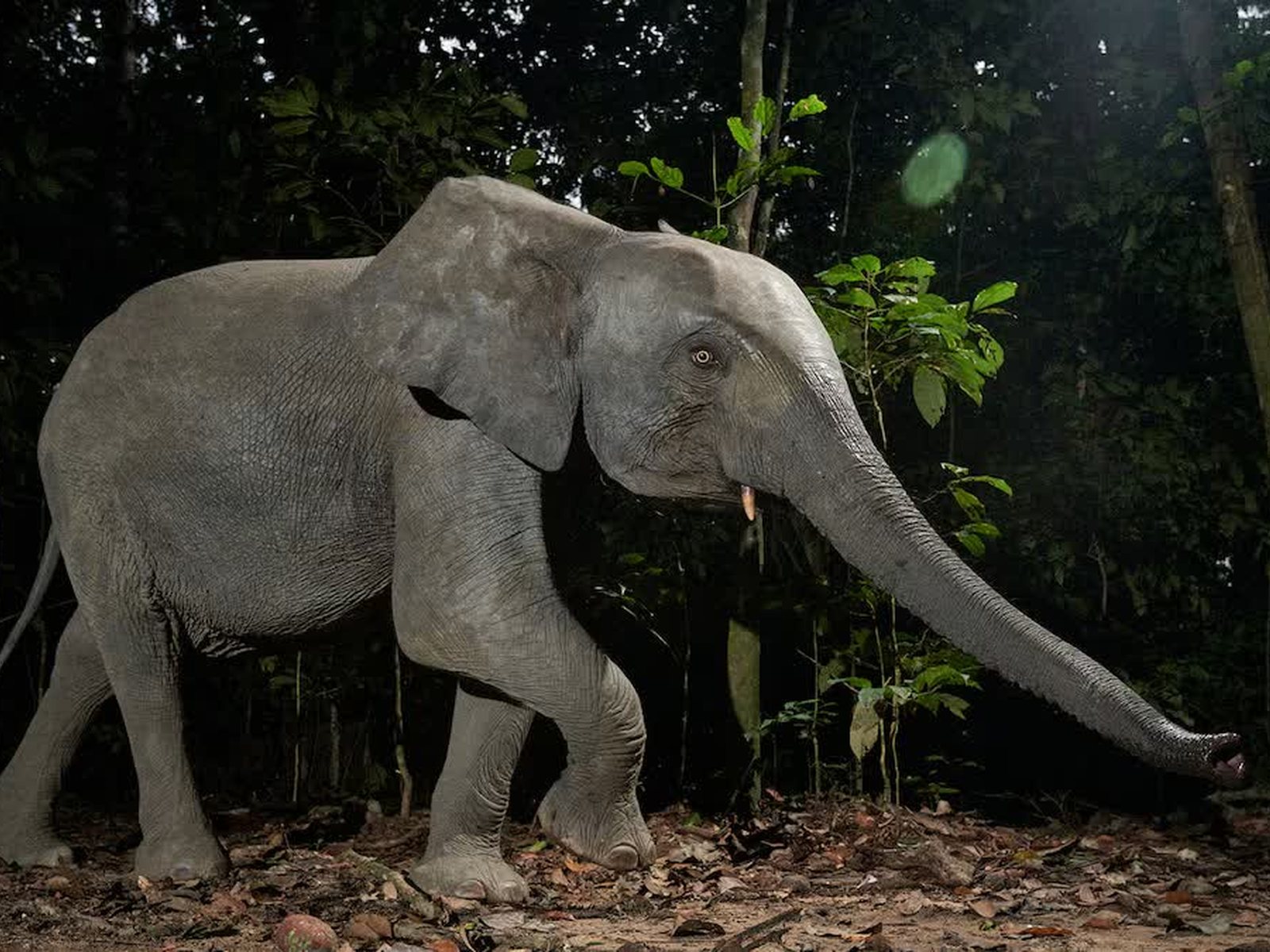
Yangambi Biosphere Reserve
Ninety years of continuous tropical research surround a near-pristine stretch of Congo Basin rainforest, 100 km upstream of Kisangani.
Africa's oldest tropical forest laboratory
Yangambi Biosphere Reserve protects roughly 235,000 hectares of primary and regenerating lowland Congolian rainforest along the Congo River, centred on the Yangambi Research Station, established by the Belgian colonial administration in 1933 and long considered the most important tropical forest research station in Africa.
For over ninety years, scientists have used Yangambi to study the Congo Basin's ecology and agriculture, developing high-yielding crop varieties and conducting the foundational taxonomic surveys that still inform Congo Basin forest science today.
Designated a UNESCO Man and Biosphere Reserve in 1976, Yangambi holds a mix of primary forest, secondary forest at various regeneration stages, and marshland forest, protecting endangered tree species like Afrormosia, whose slow, light-dependent growth pattern makes it especially vulnerable to logging pressure.
Following decades of decline after independence, the station has seen renewed investment through projects like FORETS, training a new generation of Congolese researchers; see our Okapi Wildlife Reserve guide for another research-anchored protected area in the same wider forest region.
What makes Yangambi distinct
Yangambi's near-pristine forest and long research record make it one of the best-understood stretches of Congo Basin rainforest.
Common chimpanzees
A 2018 study confirmed the presence of chimpanzees within the reserve's forest, adding to its conservation significance.
Afrormosia trees
This endangered, slow-growing hardwood is a flagship protected species, traded globally and increasingly rare outside protected areas.
Forest succession research plots
Long-term study sites track how primary forest regenerates after disturbance, a rare, decades-long ecological dataset.
Congo River ecosystem
The reserve's location on the Congo River shapes its forest structure and access, roughly two hours by boat from Kisangani.
Historic research infrastructure
Colonial-era agricultural and forestry research buildings remain part of the Yangambi Research Station's living legacy.
Biodiversity monitoring
Ongoing ant, plant, and forest structure surveys continue to document Yangambi's biodiversity across different habitat types.
How a Yangambi Research Station visit comes together
Yangambi is reached via Kisangani, with onward travel by river, road, or canoe depending on conditions.
Fly into Kisangani
Kisangani, on the Congo River, is the main gateway to the Yangambi Biosphere Reserve.
Travel upstream to Yangambi
Options include a roughly two-hour boat trip by fast outboard motor, a longer barge journey, or an unreliable seasonal road.
Visit the research station
The Yangambi Research Station offers insight into ninety years of Congo Basin forestry and agricultural science.
Guided forest walks
Walks through primary and regenerating forest introduce the reserve's flora, including Afrormosia stands.
Return to Kisangani
Departures retrace the river or road route back to Kisangani.
A biosphere reserve facing new logging pressure
Despite its research legacy and UNESCO designation, Yangambi faces growing pressure from logging companies seeking to open timber transport roads into forest connected to the reserve, some of it CITES-regulated hardwood destined for EU and US markets.
UNESCO has undertaken audits of DRC's Man and Biosphere Reserves, including a review of Yangambi's zoning, aiming to better protect its high-conservation-value forest areas. See our travel guide for current conditions.
Planning questions, answered
What makes Yangambi scientifically important?
It hosts Africa's most significant long-term tropical forest research station, with a continuous research record dating back to 1933.
How do I get to Yangambi?
Via Kisangani, followed by roughly a two-hour boat trip by fast outboard motor, a longer barge journey, or a seasonal road.
Is there wildlife to see at Yangambi?
Yes, including confirmed chimpanzee populations, though the reserve's primary draw is its forest ecology and research legacy rather than conventional game viewing.
What is Afrormosia?
An endangered, slow-growing hardwood tree species protected within Yangambi, traded globally and regulated under CITES.
When was Yangambi designated a Biosphere Reserve?
UNESCO designated it a Man and Biosphere Reserve in 1976, recognising its combination of near-pristine forest and long-term research infrastructure.
More of the DRC to plan around Yangambi
Ready to plan a visit to Yangambi?
Our team routes Yangambi's research station and forest trails alongside a Kisangani and Congo River itinerary.
What to do here
Top experiences in Yangambi Biosphere Reserve
- Common chimpanzeesA 2018 study confirmed the presence of chimpanzees within the reserve's forest, adding to its conservation significance.
- Afrormosia treesThis endangered, slow-growing hardwood is a flagship protected species, traded globally and increasingly rare outside protected areas.
- Forest succession research plotsLong-term study sites track how primary forest regenerates after disturbance, a rare, decades-long ecological dataset.
- Congo River ecosystemThe reserve's location on the Congo River shapes its forest structure and access, roughly two hours by boat from Kisangani.
Entry requirements for visiting Yangambi Biosphere Reserve
Every traveller needs a visa in advance. Read our step-by-step DRC e-visa and Congo tourist visa guide for the official DGM portal walkthrough, letter of invitation (LOI) requirements, fees, processing times and airport entry checks.
Nearby & similar
Related destinations