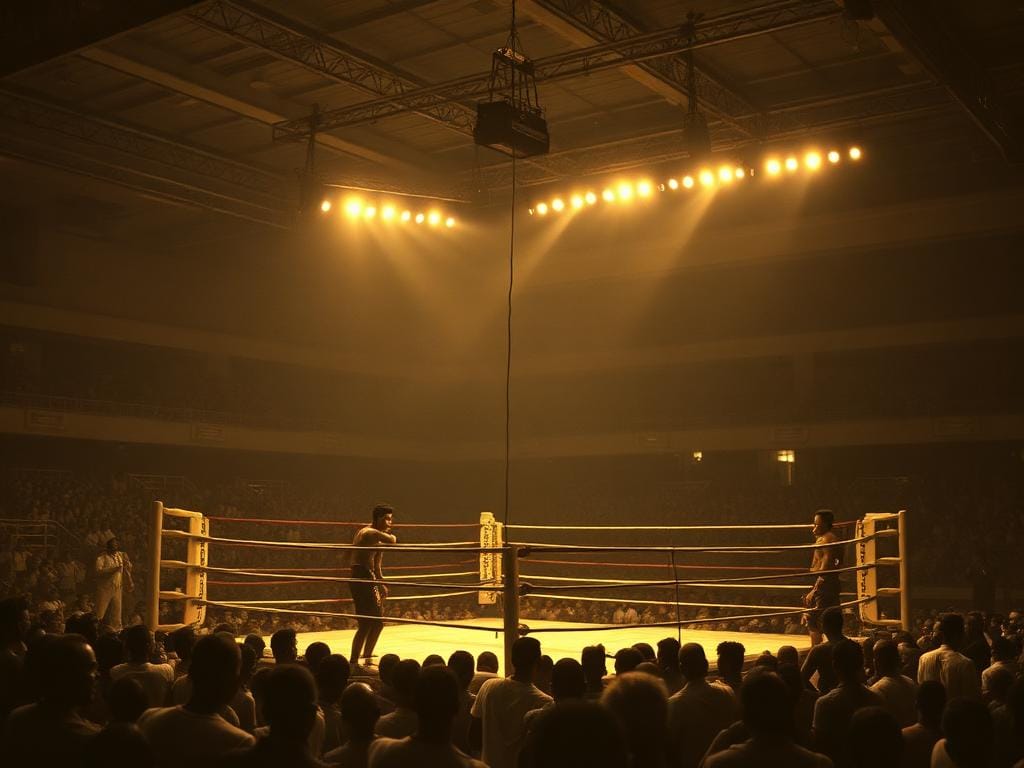
On October 30, 1974, in Kinshasa, Zaire (now the Democratic Republic of Congo), Muhammad Ali faced George Foreman in what became the most famous boxing match in history — the "Rumble in the Jungle." The fight took place at the Stade du 20 Mai (now Stade Tata Raphaël), before an estimated 60,000 spectators and a global television audience of over one billion. Ali's legendary "rope-a-dope" strategy — absorbing Foreman's powerful punches before striking in the eighth round — became one of sport's defining moments.
But the Rumble in the Jungle was never just about boxing. It was about Africa.
Kinshasa on the World Stage
In 1974, Kinshasa was chosen by President Mobutu Sese Seko to demonstrate the modernity and ambition of Zaire. The event was accompanied by a three-day music festival featuring James Brown, B.B. King, Miriam Makeba, and other legends — documented in the film *When We Were Kings* (1996, Academy Award winner).
For the first time, a global sporting event was held on African soil. The world saw Kinshasa not as a distant, obscure city, but as a place of energy, culture, and pride. Ali himself famously said: "I'm going to fight for the prestige of not only Black Americans, but Black people everywhere." The 2026 Echo: Tyson and Mayweather in Kinshasa
In April 2026, Kinshasa is set to host an exhibition boxing event featuring Mike Tyson and Floyd Mayweather Jr., as reported by Reuters. While this is an exhibition bout — not a competitive professional fight — the symbolic resonance is unmistakable.
The event echoes the spirit of 1974: global icons, African soil, worldwide attention. And once again, Kinshasa is being seen.
It's important to note that the 1974 fight was a professional world heavyweight championship bout under competitive rules, whereas the 2026 event is an exhibition — typically featuring shorter rounds, modified rules, and a focus on entertainment rather than competition. Exhibition bouts often use padded gloves and shorter round durations, though specific rules depend on the local commission and event organizers.
Why Kinshasa Still Matters
Beyond boxing, Kinshasa is one of Africa's most culturally significant cities:
- Music capital: Birthplace of Congolese rumba, soukous, and ndombolo — genres that shaped African and global popular music - Art hub: Home to the Académie des Beaux-Arts, Africa's oldest fine arts school, and a thriving contemporary art scene - River gateway: Situated on the Congo River, the world's second-largest river by discharge, offering unique river expedition opportunities - Diaspora beacon: Increasingly positioned as a homecoming destination for members of the African diaspora, particularly through programs like Return to Kongo 2026
What This Means for Tourism
The 2026 exhibition bout creates a rare window of global visibility for the DRC. DRCTourism is using this moment not for boxing tourism, but to showcase the country's cultural depth, natural heritage, and investment readiness.
The narrative is clear: come for the spectacle, stay for the culture, return for the connection.
Key Heritage Sites in Kinshasa
- Stade Tata Raphaël: The venue of the 1974 Rumble in the Jungle. Still standing, though in need of restoration. - Académie des Beaux-Arts: Founded in 1943, showcasing generations of Congolese artistic excellence - National Museum of the DRC: Ethnographic and natural history collections - Lola ya Bonobo: The world's only bonobo sanctuary, a conservation success story
Frequently Asked Questions
Where did the Rumble in the Jungle take place? The fight was held at the Stade du 20 Mai (now Stade Tata Raphaël) in Kinshasa, Zaire (now DRC), on October 30, 1974.
Is the 2026 event the same as the Rumble in the Jungle? No. The 1974 event was a professional world heavyweight championship bout. The 2026 event is an exhibition bout — a different format with modified rules, typically shorter rounds, and no official title at stake.
Can I visit the original stadium? Yes. Stade Tata Raphaël is located in the commune of Lingwala in Kinshasa. Heritage visits can be arranged through DRCTourism.
How do I combine the event with a heritage trip? DRCTourism's Return to Kongo 2026 program is designed specifically for this — combining cultural heritage, river experiences, and optional investment briefings around the April 2026 window.
---
bookings@drctourism.com | drctourism.com/return-to-kongo-2026