Likweli: The New Orange-Lipped Monkey Hiding in DR Congo's Rainforest
High in the dense forest canopy of the Democratic Republic of Congo's Lomami National Park, a rare black-furred monkey with strikingly vivid orange-pink lips has just been confirmed as a species entirely new to science — and it's a discovery nearly two decades in the making.
Meet Likweli, the Congo's Newest Primate
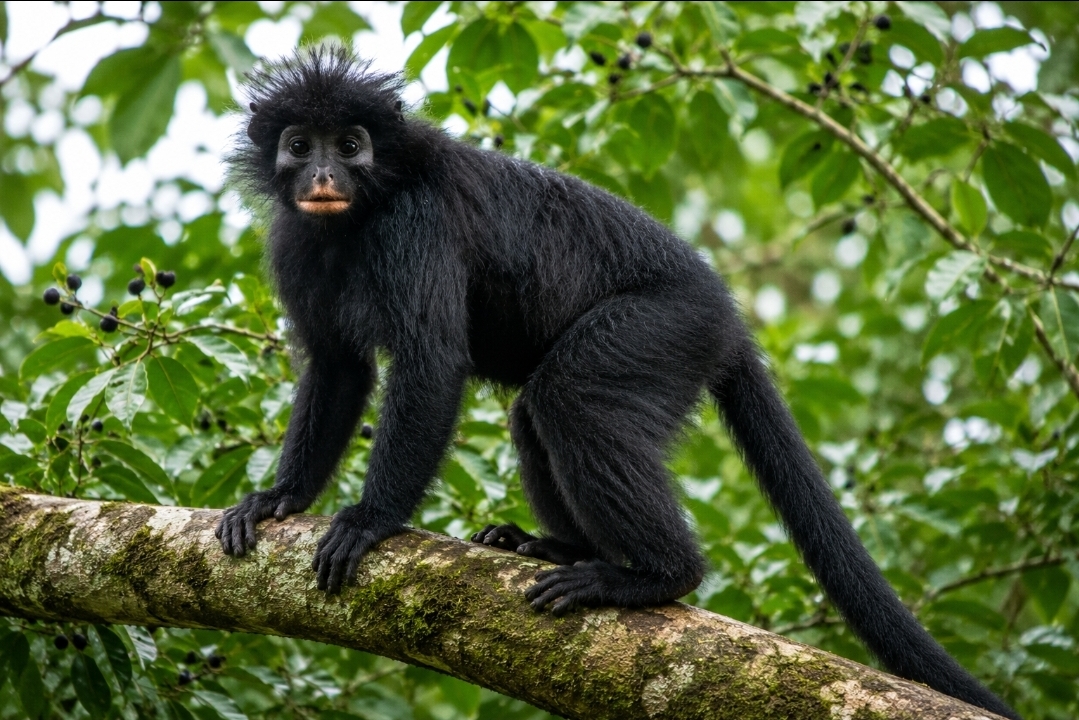
Named *Colobus congoensis* by researchers, the monkey is known locally as Likweli, a name given to it by the Balanga people who share its forest home. Likweli has a glossy black coat, a sweeping tail, slate-grey cheeks, black-rimmed eyes, and its most distinctive feature: a mask of pinkish-orange around the mouth and nose. It's an animal so elusive that even many communities living within its range had never formally documented it.
The discovery is remarkable on a global scale. Likweli is only the fifth new species of African monkey discovered in the past 75 years, placing it among a very short list of major primate finds this century.
A 17-Year Journey From Blurry Photo to Confirmed Species
The story of Likweli's discovery reads like a scientific mystery. Deep in Lomami National Park lives a rare monkey that has long evaded scientists and even most local communities. The first clue came in 2008, when a research expedition snapped a blurry photo of a black-pelted primate they didn't recognize.
A decade passed before researchers saw it again. It wasn't spotted again by scientists until 2018, when the Lukuru Wildlife Research Foundation's TL2 Project established a field base in the area, and researchers realized they were dealing with an animal they didn't know about.
That second sighting kicked off a rigorous, multi-year field campaign. Over the following four years, researchers logged 114 sightings across an area of roughly 1,700 square kilometers between the Lomami and Lilo rivers, combining photography, audio recordings of the species' distinctive calls, and detailed genetic analysis to build the case for a new species.
What Makes Likweli Genetically Unique
Genetic testing revealed a surprising twist: Likweli's closest relative is the black colobus monkey, even though the two species are separated by more than 1,200 kilometers of forest and over 3.5 million years of evolutionary divergence. Researchers from Florida Atlantic University and the City University of New York Graduate Center also confirmed the monkey has distinctive cranial, dental, and skeletal characteristics that separate it from every other known African colobus species.
Junior Amboko, a conservation biologist and PhD student at Florida Atlantic University who led much of the fieldwork, was instrumental in piecing together the evidence that finally distinguished Likweli from its relatives. The findings were formally published on July 15, 2026, in the journal *PLOS ONE*.
Why Lomami National Park Matters More Than Ever
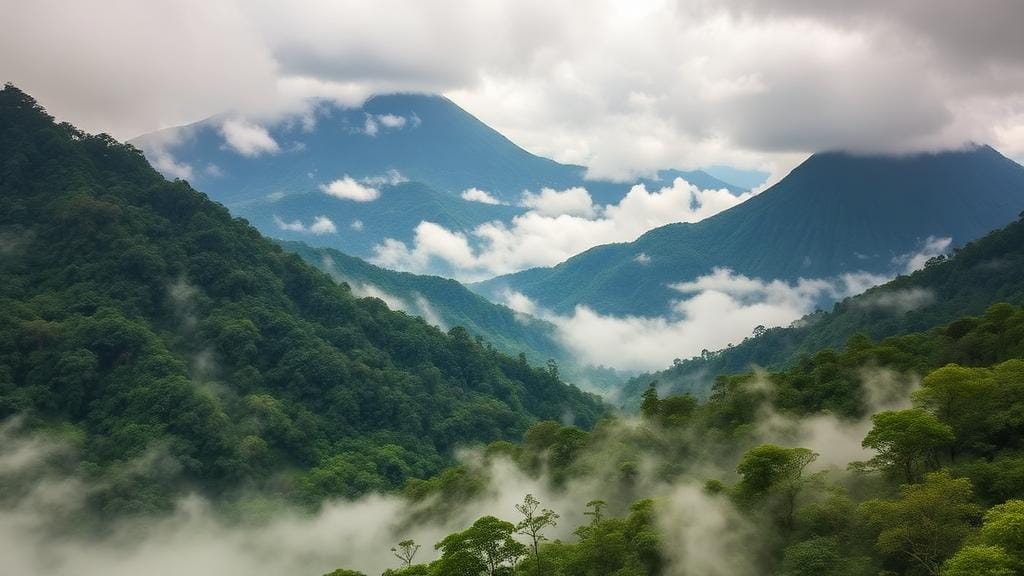
This isn't the first time Lomami has yielded a scientific surprise. The park previously produced the Lesula monkey (*Cercopithecus lomamiensis*), described in 2012 — meaning Likweli is now the second new primate species discovered in this single protected area in just over a decade. Lomami National Park spans roughly 8,874 square kilometers of largely intact rainforest, and this back-to-back pattern of discovery underscores just how much of Congo's biodiversity remains undocumented.
That significance comes with urgency. Because Likweli's known range is so limited, and because it faces pressure from hunting and habitat loss, researchers recommend the species be classified as Endangered on the IUCN Red List. As one CUNY statement put it, most of the species' known habitat lies within Lomami National Park, making protection of the region critical to its survival.
Bangor University primatologist Alexander Georgiev, who wasn't involved in the research, called the study's analysis convincing, noting how rare and exciting it is to find a species unknown not just to science but largely unknown to the very communities living alongside it.
A Window Into DR Congo's Untapped Natural Heritage
Discoveries like Likweli are a powerful reminder of what makes the Congo Basin one of the most biologically significant — and least explored — regions on Earth. For conservationists, researchers, and increasingly for travelers drawn to genuine wildlife and ecotourism experiences, DR Congo's rainforests continue to reveal secrets that few other places on the planet still can.
As protection efforts around Lomami National Park expand in response to this discovery, the region is likely to draw growing international attention — both scientific and touristic — to a corner of Central Africa that has long been overlooked.
*Sources: PLOS ONE (July 2026); Florida Atlantic University; Yale University; CUNY Graduate Center; Lukuru Wildlife Research Foundation.*
Plan your Lomami expedition or book a local guide to explore the forests where Likweli was discovered.