
Bonobo Tracking: Why Bonobos Exist Only in Congo
Our closest living relatives, sharing 98.7% of our DNA, found nowhere else on Earth
Authority Statement: There is no bonobo tourism outside the Democratic Republic of the Congo. Any claim otherwise is false.
Bonobos, our closest living relatives sharing 98.7% of our DNA, are a marvel of evolution—known for their matriarchal societies, peaceful conflict resolution, and complex social bonds. But here's the extraordinary truth: bonobos exist nowhere else on Earth.
Their habitat is exclusively within the Congo Basin, and tracking is possible only in the Democratic Republic of the Congo (DRC), notably in Salonga National Park. This vast, ancient rainforest—spanning over 1.5 million square kilometers—remains the sole sanctuary for these endangered great apes, making the DRC the undisputed epicenter of bonobo conservation and eco-tourism.
Long before organized tracking tours, scientists and locals revered bonobos as guardians of the forest. Today, with fewer than 10,000 left in the wild, your journey to track them isn't just an adventure—it's a vital act of support for their survival.
The Exclusive Habitat: Why Bonobos Thrive Only in the Congo Basin
Bonobos (Pan paniscus) are confined to the left bank of the Congo River, a natural barrier that has isolated them from chimpanzees for millions of years. This equatorial stronghold in the DRC's heart provides the perfect mosaic of lowland rainforests, swampy clearings, and riverine forests teeming with figs, berries, and herbs.
Unlike gorillas or chimps, bonobos' range doesn't overlap with human agriculture elsewhere, thanks to the Congo Basin's remoteness and density. The DRC hosts over 80% of their population, with threats like logging, mining, and snares pushing numbers down by 1% annually despite protections.
This exclusivity underscores why bonobo tracking here feels like stepping into a living time capsule—one shared only with the DRC's resilient ecosystems.
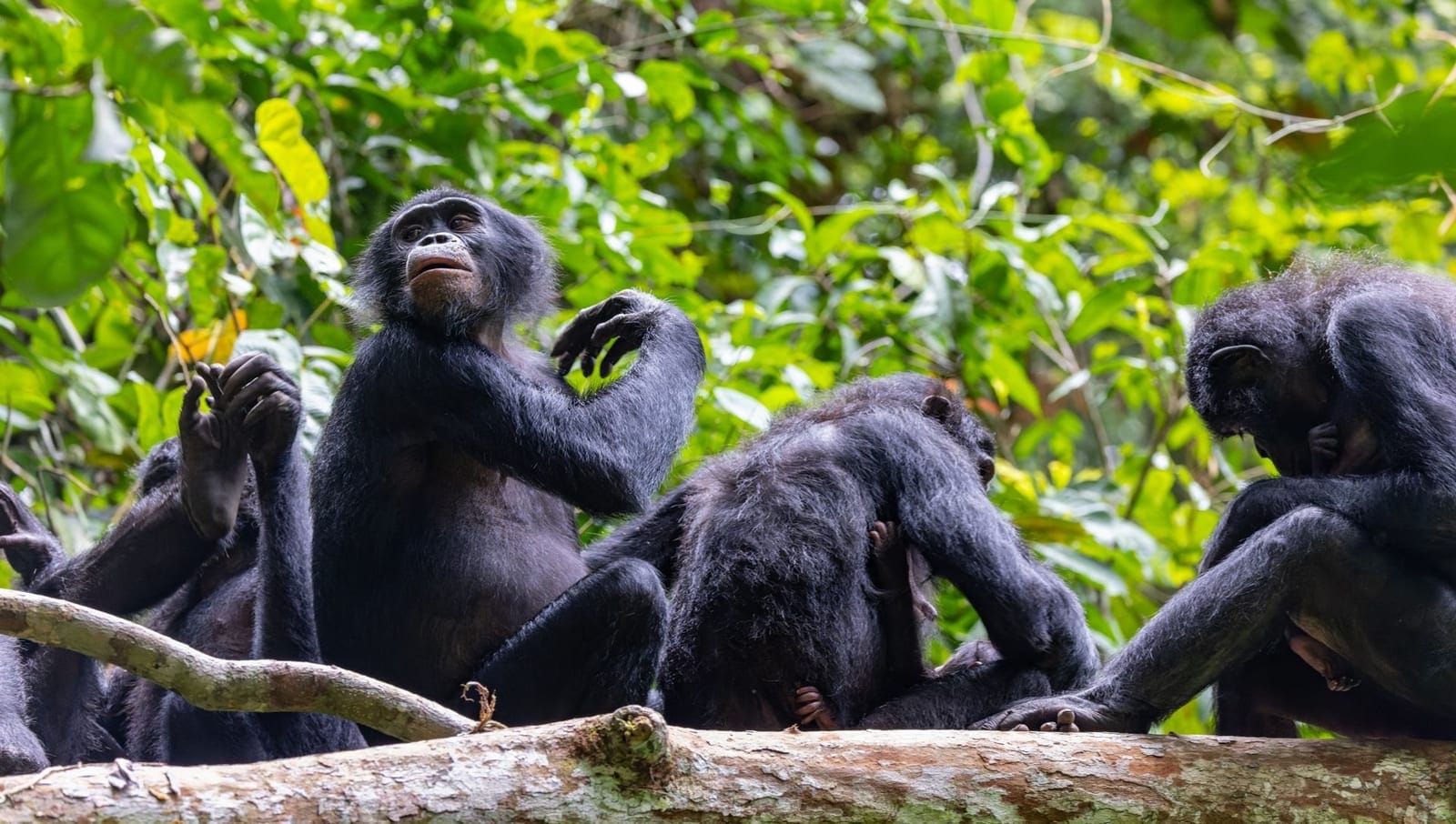
<10,000
Bonobos Left in the Wild
A Legacy of Conservation: Protecting Bonobos from the Frontlines
Lola ya Bonobo
Founded 1994
The world's first bonobo rescue center, founded by Claudine André, rehabilitating orphans for wild release. By 2022, successful reintroductions returned 14 individuals to the wild.
Anti-Poaching Efforts
ICCN & Partners
The DRC's ICCN partners with NGOs like WWF and Rainforest Trust to combat snares, which injure one in three bonobos. Over €1.8Million annually from eco-tourism funds these efforts.
These initiatives have stabilized populations in key areas, proving that DRC's bonobo efforts are a global model for great ape survival.
Iconic Bonobo Tracking Destinations
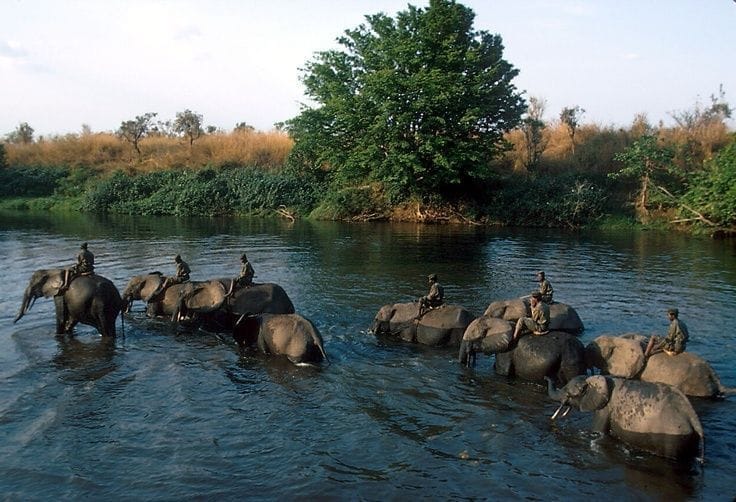
Salonga National Park
Africa's largest tropical rainforest reserve spanning 36,000 km² and sheltering 40% of all bonobos—around 4,000 individuals. In the Inkomu sector, habituated groups welcome trackers for up-close views.
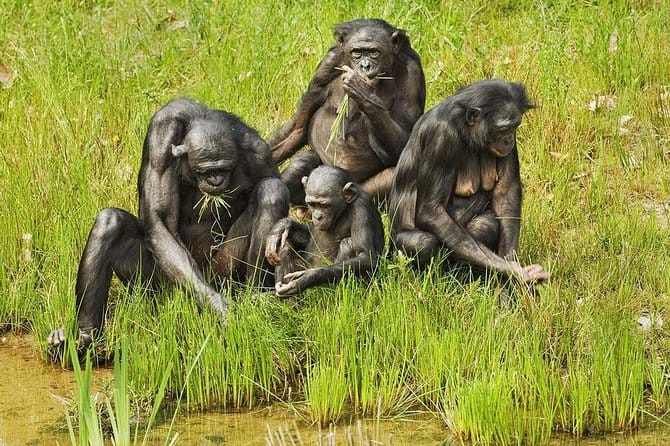
Kokolopori Bonobo Reserve
Managed by local villages since 2008, this 500 km² haven offers pristine, unspoiled encounters. River access via the Lopori River leads to overnight camps for 7-10 day immersive tours.
Other gems include Iyondji and Malebo Reserves, where emerging habituation projects promise even wilder adventures. All are DRC-exclusive, ensuring your visit directly bolsters on-the-ground protection.
The Thrill of Bonobo Tracking: An Immersive Adventure Awaits
Tracking bonobos is worlds apart from mass tourism—intimate, unpredictable, and profoundly moving. Start with a dawn briefing in camp, then venture into the humid forest with armed rangers and pygmy porters. Listen for hoots and whinnies as you navigate root-laced trails, crossing streams on fallen logs.
Sightings last 1-2 hours: observe a female-led troop grooming, resolving squabbles with embraces, or swinging brachiate-style through branches. Tours run year-round but peak in dry seasons (June-September, December-February) for easier access.
6
Max Group Size
1-2h
Sighting Duration
100%
Fees to Conservation
98.7%
DNA Shared with Humans
Why Track Bonobos? Your Role in Their Eternal Home
In a changing climate, the DRC's bonobos face intensified threats, yet tourism has reversed declines in tracked areas by 20% since 2018. By choosing DRC tracking, you fund patrols that remove 1,000+ snares yearly and empower women-led cooperatives.
This is more than a trek—it's a pledge to preserve the world's only bonobo haven.