
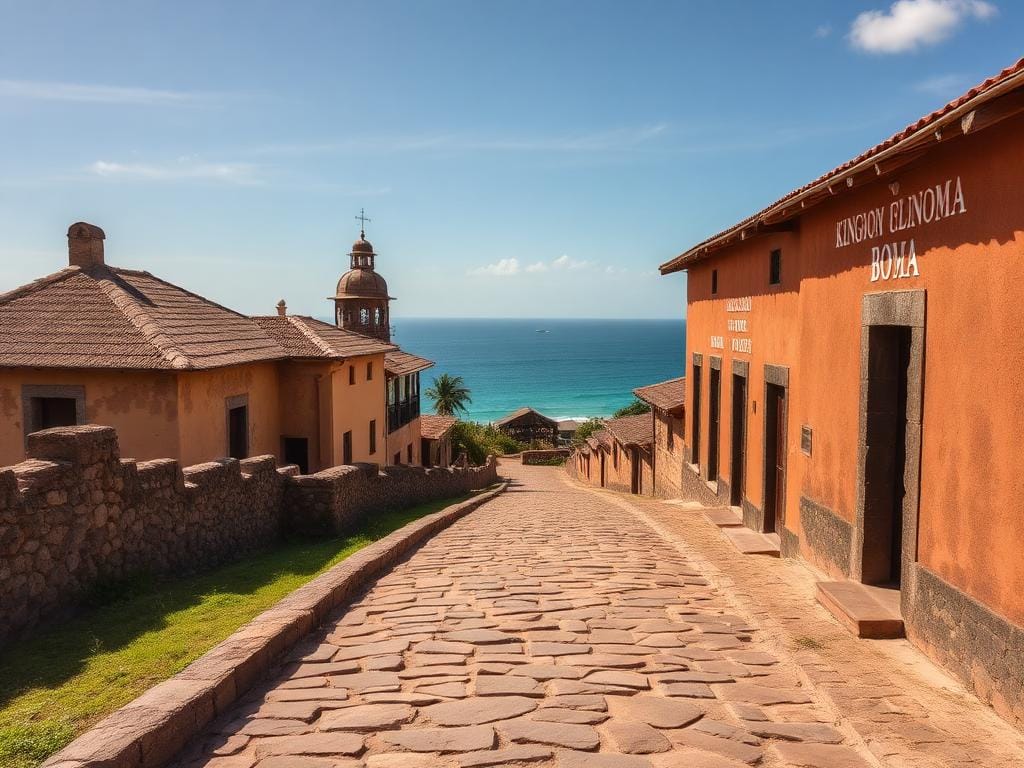
The Kingdom of Kongo was one of the most powerful and sophisticated states in pre-colonial Africa. At its height in the 15th–17th centuries, the kingdom spanned territories across present-day DRC, Republic of Congo, Angola, and Gabon — a vast realm with centralized governance, trade networks, artistic traditions, and diplomatic relations with European powers.
The Kingdom of Kongo Heritage Route is a curated travel experience that traces this legacy through the historic cities of Boma and Moanda in Kongo Central province — the ancestral heartland of the Kongo people — and along the Atlantic coast where maritime routes dating back to the 1400s connected Africa to the wider world.
Boma: The First Capital
Boma served as the capital of the Congo Free State (1885–1908) and later the Belgian Congo until 1923. But its history stretches far deeper — Boma was a significant trading post and political center long before European colonization.
What to see in Boma: - Boma Heritage Quarter: Colonial-era buildings, churches, and administrative structures that tell the story of the Congo's complex history - Old Governor's Residence: A preserved colonial building offering views over the Congo River estuary - Boma Cathedral: One of the oldest churches in Central Africa - Riverside Markets: Where the daily rhythms of trade and community life continue as they have for centuries - Memorial Sites: Locations connected to the Congo's experience under colonial rule — visited with historical context and sensitivity
Moanda & the Atlantic Coast
Moanda is the DRC's only Atlantic coastal city — a gateway to beaches, mangrove ecosystems, and maritime heritage sites.
What to see in Moanda: - Moanda Beach: The DRC's only Atlantic beach, where the Congo River meets the ocean - Mangroves National Park: A fragile coastal ecosystem of global ecological importance - Maritime Memory Sites: Coastal locations linked to early transatlantic maritime routes dating back to the 1400s. These sites are visited with guided historical context, honoring the memory of those who passed through these departure zones.
Important note on language: We describe these as "maritime routes dating back to the 1400s" and "Atlantic departure zones linked to early transatlantic routes." We do not make specific historical claims without verified documentation. The Kingdom of Kongo's engagement with European maritime powers is well-documented from the late 15th century onward.
Banana: The Gateway Point
Banana is a small coastal settlement at the mouth of the Congo River — historically significant as one of the first points of European contact with the Kongo Kingdom and a key node in Atlantic maritime networks.
The Spiritual Dimension
The Kingdom of Kongo Heritage Route is not only historical — it carries deep spiritual significance for many participants, particularly members of the African diaspora.
Community-led ceremonies of remembrance and reconnection are offered at key sites along the route. These are conducted by local cultural custodians and are designed to honor ancestors, acknowledge history, and affirm the living connections between the diaspora and the homeland.
Participation in spiritual elements is entirely optional and conducted with sensitivity and respect.
Practical Information
- Duration: 3–4 days - Departure: From Kinshasa (road transfer to Kongo Central, approximately 5–6 hours) - Group size: Maximum 15 participants - Price: From €3,500 per person - Includes: Transport, accommodation, guided heritage visits, meals, community contributions - Best combined with: Congo River Heritage Experience (2–3 days) for a complete 5–7 day heritage journey
How to Book
Contact bookings@drctourism.com or visit /return-to-kongo-2026 for packages that include the Kingdom of Kongo Heritage Route.
Frequently Asked Questions
How do I get from Kinshasa to Boma? The journey from Kinshasa to Boma is approximately 5–6 hours by road through Kongo Central province. DRCTourism provides air-conditioned vehicles with professional drivers and security protocols.
Is Moanda Beach swimmable? Yes, though ocean conditions vary. The beach is accessible and offers a unique experience — the only point where you can swim in the Atlantic Ocean from DRC soil.
What is the significance of Banana? Banana sits at the Congo River mouth and was one of the earliest points of European-Kongo contact. Its historical significance relates to early maritime trade and the complex legacy of transatlantic connections.
Can diaspora travelers arrange ancestral research? DRCTourism can connect participants with local historians and cultural custodians who may assist with ancestral research within the Kongo Central region. Results vary and cannot be guaranteed.
---
bookings@drctourism.com WhatsApp: +243 81 234 5678 drctourism.com/return-to-kongo-2026