
Location
North Kivu / Ituri Border
Duration
4–7 days
Group Size
2–8 people
Difficulty
Moderate to Challenging
Overview
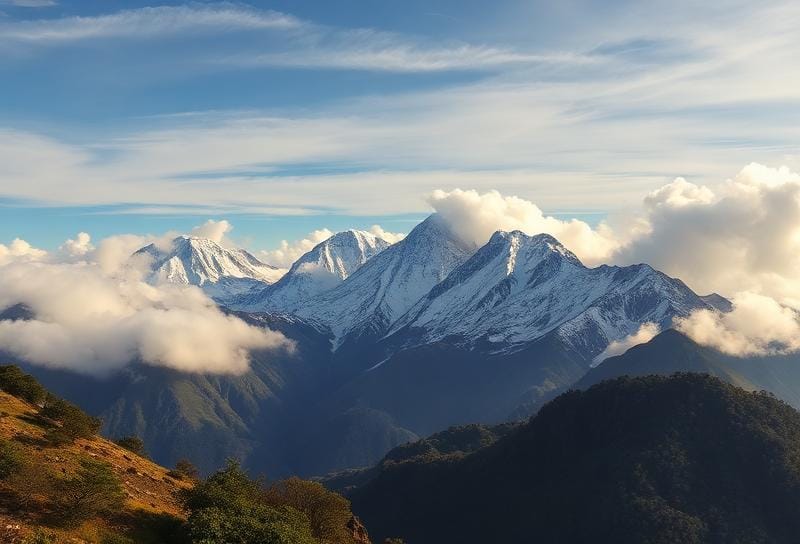
Trek into the legendary Mountains of the Moon—the Ruwenzori range that has captivated explorers since ancient times. Rising to 5,109 meters at Margherita Peak, the Ruwenzoris are Africa's third-highest mountain range and one of the continent's most mystical landscapes. The DRC side offers a less-traveled approach through pristine montane forests and remote communities. The Ruwenzori foothills on the Congolese side feature lush tropical forests, cascading streams, and villages that have maintained traditional ways of life for generations. While summit expeditions require mountaineering expertise and extended time, this foothills trek offers accessible adventure with stunning scenery and cultural immersion. Trekking here means walking through some of Africa's most biodiverse forests, home to chimpanzees, forest elephants, and dozens of bird species found nowhere else. The mountains' glaciers—though rapidly retreating—remain visible from high viewpoints, a reminder of the region's unique equatorial alpine environment.
Tour Highlights
Trek the Congolese approach to the legendary Ruwenzoris
Hike through pristine montane and bamboo forests
Spot Albertine Rift endemic birds and primates
Visit traditional Bakonzo and Bamba mountain communities
Viewpoints overlooking glaciated peaks
Wild swimming in mountain streams
Off-the-beaten-path adventure with few other tourists
Day-by-Day Itinerary
Arrival in Butembo
Fly to Butembo or Beni (from Goma or Entebbe). Transfer to mountain base hotel. Evening briefing with local guides and community leaders.
Forest Entry & First Camp
Drive to trailhead village. Begin trek through lowland forest, crossing streams and observing diverse birdlife. Ascend to first forest camp (approximately 2,400m). Evening around campfire with local guide stories.
Bamboo Zone & Mountain Views
Trek through bamboo forest zone—prime habitat for forest elephants and gorillas (sightings rare but possible). Emerge at viewpoints with first views of Ruwenzori peaks. Camp at forest edge (approximately 2,800m).
High Meadows Exploration
Day hike to alpine meadows and heathland. Giant lobelias and heathers create otherworldly landscapes. Glacier views on clear days. Return to camp for final mountain night.
Descent & Community Visit
Descend via alternative route through different forest zones. Visit Bakonzo village for cultural exchange—learn about mountain life, traditional crafts, and sustainable farming. Overnight at village guesthouse.
Return to Butembo
Morning cultural activities or short walk. Transfer back to Butembo. Celebration lunch with guides. Optional afternoon exploration of local markets.
Departure
Transfer to airport or continue to Virunga National Park for gorilla trekking. Optional extension to Lake Albert.
What's Included
- All trekking permits and fees
- Local community guides and porters
- Armed escort for security
- Camping equipment (tents, sleeping mats)
- All meals during the trek
- Drinking water purification
- Ground transportation
- Community visit contributions
- 6 nights accommodation (hotel + camping + village stay)
Not Included
- Flights to Butembo/Beni
- International flights
- DRC visa (€97)
- Travel insurance (mandatory)
- Personal trekking equipment
- Sleeping bag (can be rented)
- Tips for guides and porters
- Alcoholic beverages
Practical Information
Conservation & Community Impact
The DRC side of the Ruwenzoris remains less protected than the Ugandan national park, making community-based conservation essential. Your trek supports: • Direct income for local guides and porters from mountain communities • Community conservation committees that protect forest from encroachment • Sustainable agriculture training to reduce forest pressure • Wildlife monitoring in partnership with international conservation groups • School support in remote mountain villages • Trail maintenance and visitor infrastructure By choosing to trek on the DRC side, you're helping demonstrate that forests have value beyond timber—providing economic incentive for communities to protect rather than exploit these remarkable ecosystems.
Best Time to Visit
Best season: December-February and June-August
Physical Requirements
Good fitness required (5-7 hours hiking daily)