
Location
Ituri Forest, Oriental Province
Duration
5–8 days
Group Size
2–8 people
Difficulty
Moderate
Overview
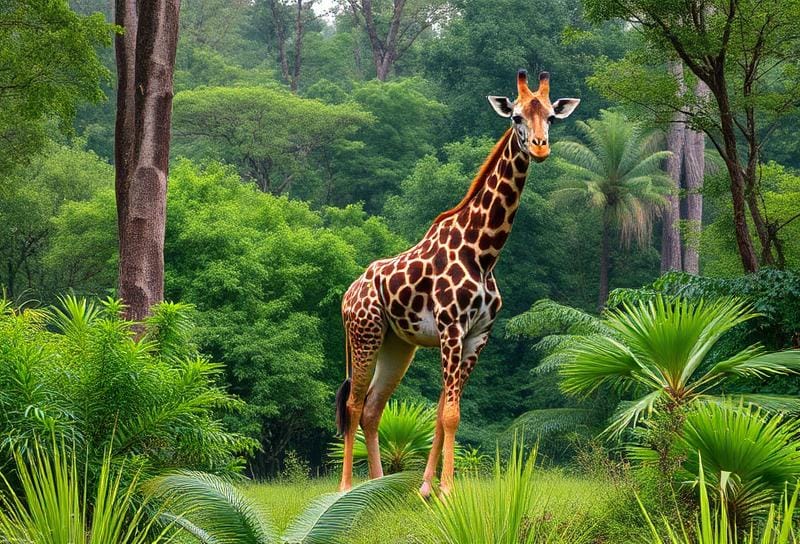
Journey into the legendary Ituri Forest to search for one of Africa's most mysterious creatures—the okapi. This "forest giraffe," found only in the DRC, remained unknown to Western science until 1901 and continues to captivate wildlife enthusiasts with its zebra-striped legs, giraffe-like features, and secretive forest-dwelling habits. The Okapi Wildlife Reserve, a UNESCO World Heritage Site, protects 14,000 square kilometers of pristine rainforest that is home to an estimated 5,000 okapis—the largest population anywhere. Beyond okapis, the reserve harbors 13 primate species, forest elephants, forest buffalo, and over 350 bird species. This expedition combines wildlife tracking with cultural immersion, as the Ituri Forest is also home to the Mbuti and Efe pygmy communities, who have lived in harmony with this forest for thousands of years.
Tour Highlights
Track wild okapis with expert pygmy guides
Visit the Epulu Conservation and Research Centre
Meet orphaned okapis in rehabilitation programs
Experience Mbuti pygmy forest culture and traditions
Observe 13 primate species including chimpanzees
Night walks for nocturnal wildlife
Explore one of the world's most biodiverse rainforests
Day-by-Day Itinerary
Arrival at Epulu
Fly to Kisangani or Bunia, then overland transfer to Epulu village (3-4 hours through beautiful forest). Check in to forest lodge. Evening orientation on okapi ecology and conservation.
Okapi Conservation Centre
Morning visit to the Epulu Okapi Conservation Centre. Meet orphaned and rescued okapis up close. Learn about okapi biology, breeding programs, and conservation challenges. Afternoon forest walk with Mbuti guides.
Wild Okapi Tracking
Full-day expedition into the forest with Mbuti trackers who know okapi habits intimately. Search for fresh tracks, dung, and feeding signs. Patience required—wild okapis are elusive! Picnic lunch in the forest.
Primate & Wildlife Day
Early morning chimpanzee tracking (if habituated groups available). Afternoon canopy walk and birdwatching. Evening: Mbuti music and storytelling around the campfire.
Mbuti Cultural Immersion
Spend the day with Mbuti families learning forest survival skills, traditional hunting techniques (demonstration only), honey gathering, and medicinal plant knowledge. Participate in traditional dances.
Second Okapi Trek & Forest Exploration
Return to the forest for more okapi tracking. Visit giant forest trees and natural clearings where wildlife congregates. Evening night walk for nocturnal species.
Community Projects & Departure Prep
Morning visit to community conservation projects funded by tourism. Learn about sustainable forest use. Afternoon at leisure or optional activities.
Departure
Transfer back to Kisangani or Bunia for onward flights. Optional: extend to Virunga National Park or Garamba.
What's Included
- All wildlife tracking activities
- Okapi Conservation Centre visit
- Park and reserve fees
- Mbuti guide services and cultural experiences
- Ground transportation from Kisangani or Bunia
- 7 nights accommodation (lodge and forest camp)
- All meals during the expedition
- Drinking water and forest snacks
- Night walk equipment
- Carbon offset contribution
Not Included
- Domestic flights to Kisangani or Bunia
- International flights
- DRC visa (€97)
- Travel insurance (mandatory)
- Tips for guides and community hosts
- Personal equipment
- Alcoholic beverages
Practical Information
Conservation & Community Impact
The Okapi Wildlife Reserve faces significant threats from illegal mining, poaching, and armed conflict. Your visit supports: • Gilman International Conservation's okapi protection programs • Anti-poaching patrols across the reserve • Orphan okapi rehabilitation and release • Mbuti community livelihoods linked to forest conservation • Scientific research on okapi populations and ecology • Education programs in surrounding communities The okapi is the national symbol of the DRC and a flagship species for Congo Basin conservation. Protecting okapis means protecting the entire Ituri Forest ecosystem.
Best Time to Visit
Best season: January-March and June-September (drier periods)
Physical Requirements
Moderate fitness required (4-6 hours walking daily)