
Location
Tanganyika Province
Duration
4–6 days
Group Size
2–8 people
Difficulty
Moderate
Overview
Discover the wonders of Lake Tanganyika—the world's second-deepest lake and one of the oldest, containing an estimated 17% of Earth's surface freshwater. On the DRC's eastern shore, this ancient lake offers extraordinary opportunities for kayaking, diving, snorkeling, and cultural immersion in communities that have thrived on its shores for millennia. Lake Tanganyika's crystal-clear waters support over 350 species of fish, including hundreds of colorful cichlids found nowhere else on Earth. The lake's great age (estimated 9-12 million years) has allowed spectacular evolutionary diversity to develop—a living laboratory for understanding how new species form. Beyond its natural wonders, Lake Tanganyika's shoreline is home to fishing communities that maintain traditional practices while adapting to modern challenges. This expedition combines water-based adventure with meaningful cultural exchange, offering a unique perspective on one of Africa's most remarkable ecosystems.
Tour Highlights
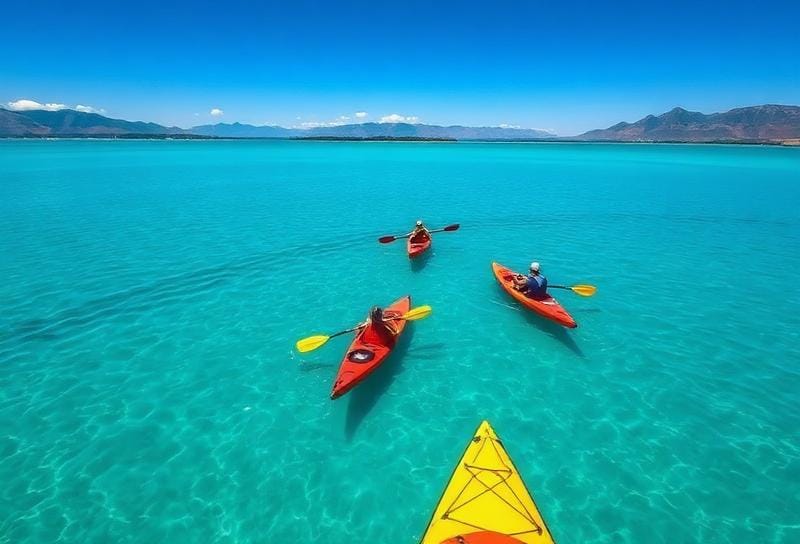
Kayak along pristine lake shores backed by mountains
Dive or snorkel among endemic cichlid species
Visit traditional fishing villages and observe nightly fishing operations
Swim in the world's second-deepest lake
Sunset cruises and beach camping
Explore the markets and culture of Kalemie town
Spot freshwater crocodiles and aquatic birds
Day-by-Day Itinerary
Arrival in Kalemie
Fly to Kalemie from Lubumbashi or Kinshasa. Transfer to lakeside lodge. Afternoon orientation and first swim in the crystal-clear lake. Sunset dinner overlooking the water.
Kayaking Expedition
Morning kayaking along the shore, exploring hidden coves and beaches. Watch for monitor lizards and fish eagles. Stop at a fishing village for lunch and community interaction. Afternoon snorkeling session in shallow cichlid habitat. Return to lodge for evening.
Diving Day
Full day dedicated to diving (for certified divers) or extended snorkeling. Explore underwater rock formations and observe the incredible diversity of cichlid species. Between dives, relax on pristine beaches. Evening visit to fishing operations as boats prepare for night fishing.
Village Life & Camping
Boat transfer to remote section of shoreline. Full-day immersion in fishing village life—join fishermen preparing nets, visit smokehouses, interact with community. Camp on beach with campfire dinner under stars.
Morning Paddle & Kalemie
Dawn kayaking session with calm water and excellent light. Return to Kalemie for exploration—Belgian colonial architecture, central market, and palm oil production. Farewell dinner.
Departure
Morning at leisure or final lake swim. Transfer to Kalemie airport for departure.
What's Included
- All kayaking equipment and instruction
- Diving equipment and certified dive guides (for qualified divers)
- Snorkeling gear
- Boat transfers along the lake
- 5 nights accommodation (lodge + beach camping)
- All meals during the expedition
- Community visit contributions
- English-speaking guides
- Airport transfers
- Beach camping equipment
Not Included
- Flights to/from Kalemie
- International flights
- DRC visa (€97)
- Travel insurance (mandatory)
- Dive certification course (available at extra cost)
- Personal equipment
- Tips for guides and camp staff
- Alcoholic beverages
- Optional fishing trips
Practical Information
Conservation & Community Impact
Lake Tanganyika faces multiple threats: overfishing, sedimentation from deforestation, and climate change affecting its ancient ecosystem. Your expedition supports: • Research partnerships studying cichlid populations and lake health • Sustainable fishing practices in partner communities • Community-based tourism providing alternatives to destructive practices • Environmental education in lakeside schools • Reforestation programs reducing sedimentation • Monitoring of invasive species and pollution Lake Tanganyika's endemic species took millions of years to evolve—protecting them requires sustained commitment. Responsible tourism demonstrates the lake's value as a living ecosystem rather than simply a resource to exploit.
Best Time to Visit
Best season: May-October (dry season, calmest waters)
Physical Requirements
Moderate fitness required