
Location
Kinshasa to Kisangani
Duration
7–14 days
Group Size
4–12 people
Difficulty
Moderate to Challenging
Overview
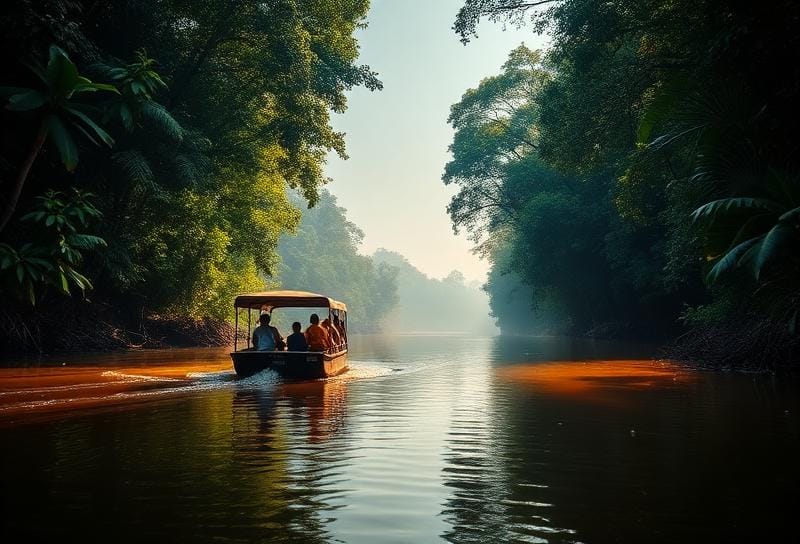
Journey along the legendary Congo River—the world's second-largest river by discharge and Africa's most powerful waterway. This expedition follows in the wake of explorers and traders who have navigated these waters for centuries, offering an immersive experience of Congolese life, culture, and wilderness that few travelers ever witness. The Congo River has shaped human history in Central Africa for millennia. Today, it remains the region's primary highway, with barges, pirogues, and ferry boats connecting communities that have no road access. Traveling by river offers a window into authentic Congolese life—fishing villages, floating markets, forest communities, and the incredible biodiversity of the Congo Basin. This expedition combines comfortable vessel accommodation with shore excursions into rainforest, village visits, and wildlife observation. Whether you choose the full Kinshasa-Kisangani journey or shorter segments, the river reveals a side of the DRC that land-based travel cannot match.
Tour Highlights
Navigate the world's second-largest river by volume
Experience river life: fishing villages, floating markets, forest communities
Enter the Congo Basin rainforest by water
Visit the Boyoma Falls (Stanley Falls)—the river's dramatic upper reach
Observe river wildlife: hippos, crocodiles, forest elephants at water's edge
Sleep aboard expedition vessel or riverside camps
Walk through primary rainforest at shore excursions
Day-by-Day Itinerary
Kinshasa Departure
Explore Kinshasa's vibrant culture before boarding. River orientation and safety briefing. Depart Kinshasa, passing the powerful rapids of the Pool Malebo. First nights on board as we leave the capital behind.
Middle Congo & Forest Tributaries
Navigate the wide middle course of the river. Stop at riverside villages for cultural exchange and local markets. Enter forest zones where the river narrows and wildlife increases. Shore excursions into primary rainforest.
Mbandaka & Equator Crossing
Arrive at Mbandaka, provincial capital at the confluence of the Congo and Ruki rivers. Explore the town and visit the famous Equator monument. Excursion into Lac Tumba region—flooded forest and diverse birdlife.
Upriver into Wilderness
Continue upriver as the forest closes in. Watch for forest elephants at the water's edge, spot hippo pods, and observe fishing eagles. Village stops become more traditional as we enter remote territory.
Kisangani & Boyoma Falls
Approach Kisangani, the legendary 'city at the end of navigation.' Visit the thundering Boyoma Falls (Stanley Falls)—seven cataracts that mark the end of navigable river. Explore Kisangani's colonial-era architecture and markets. Flight back to Kinshasa or onward journey.
What's Included
- Expedition vessel accommodation
- All meals on board and at shore camps
- Expert river guide and local captain
- All shore excursions and village visits
- Forest walks with local guides
- Fuel and boat maintenance
- Safety equipment and first aid
- Cultural exchange contributions
- Return flight Kisangani-Kinshasa (or as specified)
Not Included
- International flights
- Kinshasa hotel nights (pre/post expedition)
- DRC visa (€97)
- Travel and medical evacuation insurance (mandatory)
- Personal equipment and clothing
- Alcoholic beverages beyond basics
- Tips for crew and guides
- Optional activities at ports of call
Practical Information
Conservation & Community Impact
The Congo River and its basin constitute the world's second-largest rainforest, storing billions of tons of carbon and hosting unparalleled biodiversity. River tourism supports: • Community-based conservation in riverside villages • Sustainable fishing practices advocacy • Forest protection awareness along the river corridor • Economic alternatives to logging and poaching • Documentation of traditional ecological knowledge • Partnerships with international conservation organizations Every expedition contributes to demonstrating that the Congo Basin's forests and rivers are worth more standing and flowing than cleared and depleted.
Best Time to Visit
Best season: June-September (lower water, easier navigation)
Physical Requirements
Basic fitness required; heat and humidity can be challenging