Explore Mai-Ndombe
Africa's blackwater lake jewel and vast wetland wilderness
Authentic • Untamed • Extraordinary
Province Overview
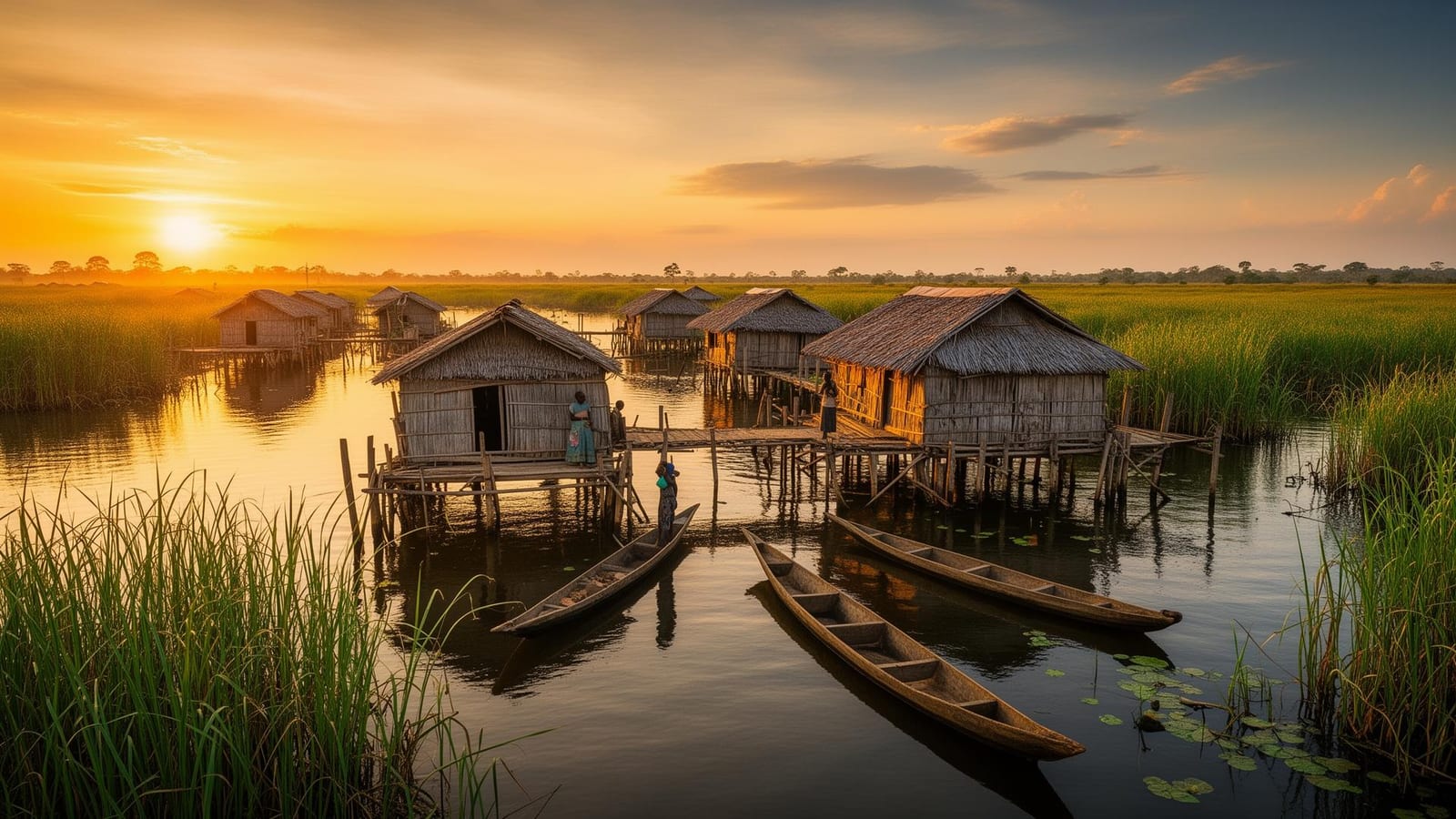
Mai-Ndombe Province is named for the spectacular 'black water' lake that dominates its landscape. Lake Mai-Ndombe and the surrounding Tumba-Lediima wetland system form one of the world's most important carbon sinks and biodiversity reservoirs. Floating villages, endemic fish species, and vast flooded forests make this a unique destination for those seeking remote wilderness and authentic water-based communities.
Key Highlights
- Lake Mai-Ndombe – Africa's largest blackwater lake
- Tumba-Lediima Nature Reserve – Ramsar wetland of global importance
- Floating villages and traditional fishing communities
- Critical peatland carbon storage ecosystems
- Oshwe and Mangai hunting domains for wilderness exploration
Map & Location
Mai-Ndombe Province occupies a vast wetland basin in western DRC, dominated by Lake Mai-Ndombe – one of Africa's largest lakes. The province lies south of the Congo River, with extensive peatlands, swamp forests, and flooded grasslands. Access is primarily by water, with the provincial capital Inongo serving as the main gateway.
How to Get Here
- Flights to Inongo from Kinshasa
- River boat from Kinshasa via the Congo and Kasai rivers
- Road access extremely limited – boats are primary transport
- Internal boat networks connect lake communities
Nearby Landmarks
- Lake Mai-Ndombe – Africa's largest blackwater lake
- Tumba-Lediima Nature Reserve (Ramsar site)
- Oshwe Hunting Domain
- Mangai Hunting Domain
- Lake Tumba
Nearby Attractions
-2.0000°, 18.2700°
Explore Mai-Ndombe's Territories
Discover the unique administrative territories within Mai-Ndombe, each offering distinctive cultural experiences and community tourism opportunities.
Territories of Mai-Ndombe
Explore the administrative territories within Mai-Ndombe for community tourism and development opportunities.

Wildlife & Natural Highlights
Ecosystems, key species, and conservation significance in Mai-Ndombe.
Ecosystems
- Blackwater lake ecosystem
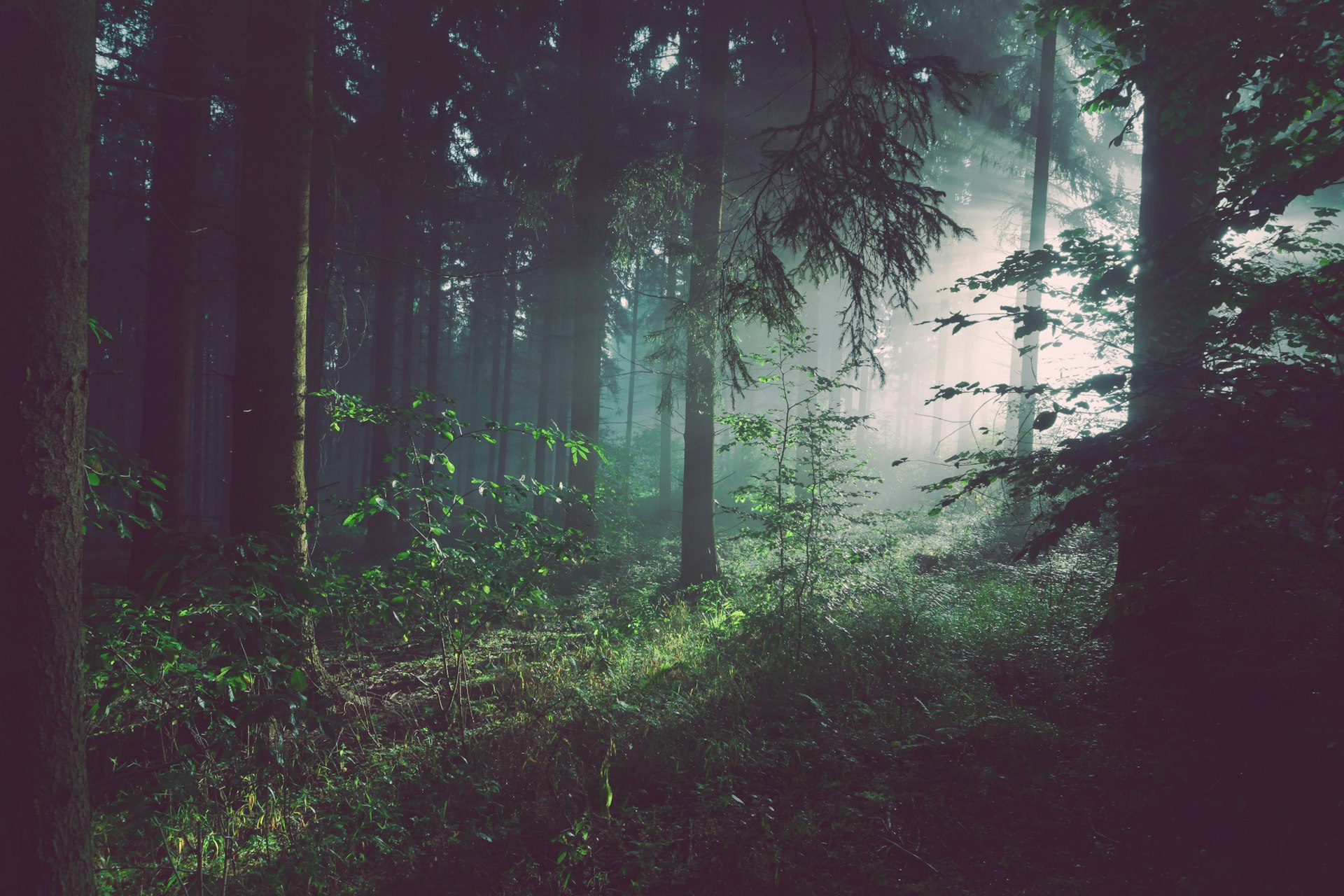
- Peatland swamp forests
- Flooded grasslands
- Riverine forests
- Floating vegetation mats
Key Species
- Bonobo populations in surrounding forests
- Hippos
- Crocodiles
- Endemic cichlid fish species
- Sitatunga antelope
- African grey parrot
- Shoebill stork (rare)
- Water birds including herons and kingfishers
Conservation Importance
The Tumba-Lediima wetlands are a Ramsar site of international importance, protecting one of the world's largest tropical peatlands. These peatlands store billions of tons of carbon and are critical for climate regulation. The lake and wetlands support unique endemic species.
Top Attractions in Mai-Ndombe
Nature, heritage, and iconic places to explore.
Lake Mai-Ndombe
Vast blackwater lake with unique ecosystem and fishing communities.
Tumba-Lediima Nature Reserve
Ramsar wetland protecting peatlands and endemic species.
Floating Villages
Traditional communities living on the lake waters.
Oshwe Hunting Domain
Wetland and flooded forest wilderness.
Inongo Waterfront
Lake port town with markets and cultural life.
Culture & Heritage
Cultural Identity
The lake peoples of Mai-Ndombe have developed unique adaptations to life on water, building floating homes and developing sophisticated fishing techniques over generations.
Crafts & Art
Canoe building is the premier craft, with dugout canoes essential for daily life. Woven fish traps and baskets reflect the water-based economy.
Cuisine
Fresh fish dominates every meal, prepared in dozens of traditional ways. Smoked and dried fish are important for trade and preservation.
Music & Dance
Water festivals feature elaborate canoe processions and competitive races. Drumming echoes across the lake during celebrations.
What to Respect
- Request permission before entering floating villages
- Do not disturb fishing grounds or equipment
- Support sustainable fishing practices
- Respect water-based customs and rituals
Signature Travel Experiences
Lake Mai-Ndombe Expedition
Multi-day boat journey exploring the blackwater lake.
Floating Village Visit
Stay with traditional fishing communities on the water.
Tumba-Lediima Reserve Tour
Explore critical peatland and wetland ecosystems.
Traditional Fishing Experience
Learn ancestral fishing techniques from local masters.
Suggested Itineraries
Arrive Inongo
- Travel to Inongo
- Waterfront orientation
- Sunset boat ride
Lake Exploration
- Full day on Lake Mai-Ndombe
- Visit floating villages
- Traditional fishing
Wetland Wilderness
- Tumba-Lediima Reserve
- Peatland walks
- Wildlife watching
Cultural Day
- Market visit
- Canoe building demonstration
- Water festival evening
Departure
- Final lake morning
- Return journey
Practical Travel Information
Best Time to Visit
- Dry season (May–October) for best lake access and visibility
- Rainy season floods many areas but lake remains accessible
- Year-round for fishing community visits
Getting There
- Boat journey from Kinshasa via Congo River and tributaries
- Small aircraft to Inongo airstrip
- Road access very limited and seasonal
Health & Packing
- Yellow fever vaccination required
- Malaria prophylaxis essential
- Waterproof bags for all equipment
- Sun protection for open water
Where to Stay
Comfort
Guesthouses in Inongo town.
- Inongo Lake View
- Provincial guesthouses
Premium
Limited premium options - arrange through operators.
- Private lodges
Expedition
Floating camps and village stays.
- Floating village homestays
- Lake camps
FAQs about Mai-Ndombe
Plan Your Visit
Discover guided tours, curated experiences, and responsible travel options available in Mai-Ndombe.
Tell us your travel dates and style — we'll design a curated itinerary.
Conservation-first • Community impact • Ranger-led experiences • Verified guides