
Location
Salonga National Park
Duration
7–12 days
Group Size
2–6 people
Difficulty
Challenging
Overview
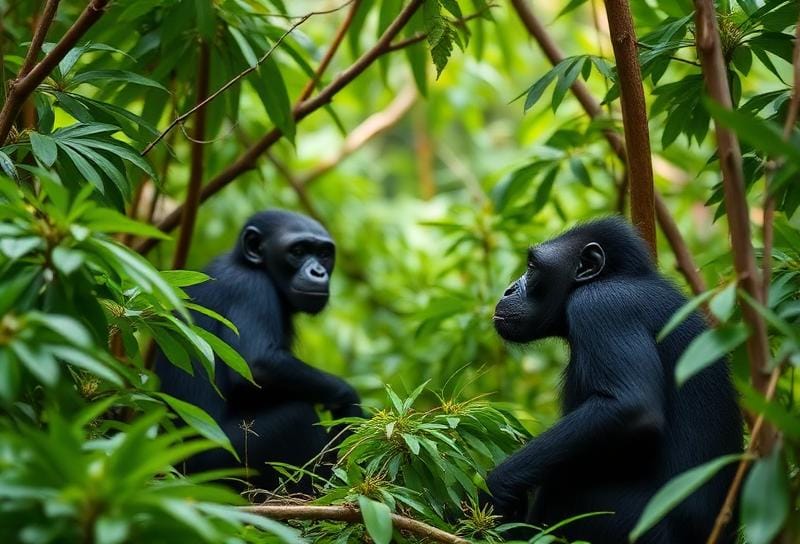
Embark on an extraordinary expedition into the heart of the Congo Basin to encounter our closest living relatives—the bonobos. Found nowhere else on Earth but the Democratic Republic of Congo, bonobos are humanity's peaceful cousins, known for their matriarchal societies, conflict resolution through social bonding, and remarkable intelligence. Salonga National Park, a UNESCO World Heritage Site, is Africa's largest protected tropical rainforest, spanning 36,000 square kilometers of pristine wilderness. This expedition takes you deep into this remote sanctuary, where habituated bonobo groups allow researchers and visitors to observe their fascinating social behaviors. This is not a typical wildlife tour—it's a true expedition requiring physical fitness, patience, and a spirit of adventure. The reward is an encounter so rare and profound that fewer than 500 people experience it each year.
Tour Highlights
Track habituated bonobo groups in their natural rainforest habitat
Navigate the Congo Basin by river and forest trails
Stay in remote research camps deep in the forest
Learn from primatologists about bonobo behavior and conservation
Explore Africa's largest continuous rainforest ecosystem
Support critical bonobo population research
Observe Congo's incredible biodiversity: forest elephants, forest buffalo, rare birds
Day-by-Day Itinerary
Kinshasa to Monkoto
Arrive in Kinshasa, transfer to domestic flight to Monkoto (or Mbandaka, depending on logistics). Orientation briefing with WWF/ICCN researchers. Overnight at expedition base.
River Journey into Salonga
Travel by motorized pirogue (traditional canoe) through flooded forests and river channels. Observe forest birdlife, crocodiles, and river communities. Arrive at the research station in the core forest zone.
Bonobo Tracking Days
Daily treks with researchers to locate habituated bonobo groups. Observe feeding, social interactions, and possibly dramatic displays. Each tracking session offers 2-3 hours with the bonobos. Evenings feature talks on bonobo research and conservation challenges.
Exploration & Return Journey
Morning bonobo tracking or forest walk. Begin river journey back to Monkoto. Opportunity to visit local villages and learn about sustainable forest use.
Return to Kinshasa
Flight back to Kinshasa. Debrief with conservation team. Optional city tour or early departure.
What's Included
- All bonobo tracking activities with researchers
- Park fees and research station contributions
- Domestic flights (Kinshasa-Monkoto round trip)
- River transport by motorized pirogue
- Expedition camping equipment
- All meals in the forest
- Expert guides and trackers
- Porters for equipment
- Safety and first aid support
- Carbon offset for all transport
Not Included
- International flights
- DRC visa (€97)
- Kinshasa hotel nights (pre/post expedition)
- Travel and evacuation insurance (mandatory)
- Personal equipment and clothing
- Tips for guides, trackers, and camp staff
- Alcoholic beverages
Practical Information
Conservation & Community Impact
Bonobos are endangered, with an estimated 15,000-20,000 individuals remaining in the wild. This expedition directly supports: • Bonobo habituation programs enabling long-term research • Community-based forest management with local villages • Anti-poaching patrols across Salonga's vast territory • Scientific research on bonobo behavior and ecology • Education programs reaching thousands of Congolese youth Your participation provides financial justification for protecting the Congo Basin's forests—the world's second-largest carbon sink—while ensuring bonobos have a future in the wild.
Best Time to Visit
Best season: December-February and June-August (lower rainfall)
Physical Requirements
Excellent physical fitness required (6-8 hours hiking daily in humid conditions)